


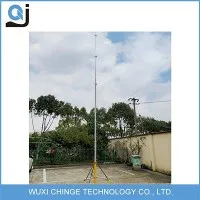
Can a telescopic aerial mast be used for maritime communication? That's a question I often get asked as a supplier of telescopic aerial masts. In this blog, I'll dig into this topic, exploring the feasibility, advantages, and potential challenges of using telescopic aerial masts for maritime communication.
Let's start with the basics. A telescopic aerial mast is a structure that can be extended and retracted. It's made up of multiple sections that slide into one another, allowing it to reach different heights. These masts are commonly used in various applications, including broadcasting, surveillance, and emergency communication. But can they work in the maritime environment?
Well, the short answer is yes. Telescopic aerial masts can indeed be used for maritime communication, and they come with several benefits. First off, their adjustable height is a major plus. In the maritime world, being able to raise your communication antenna to a higher position can significantly improve the range and quality of your signals. Whether you're on a large cargo ship or a small fishing boat, having the flexibility to adjust the mast's height according to your needs can make a big difference.
For example, when you're in open waters, you might want to extend the mast to its maximum height to get better line - of - sight with other vessels or shore - based communication stations. On the other hand, when you're entering a port or passing under a low bridge, you can easily retract the mast to avoid any collisions. This adaptability is something that fixed - height masts just can't offer.
Another advantage is the ease of installation and transportation. Telescopic aerial masts are relatively lightweight compared to traditional masts, especially those made of materials like Telescopic Aluminum Mast. This makes them easier to install on different types of vessels. You don't need a large crew or heavy - duty equipment to set them up. Plus, when it comes to transportation, they can be collapsed and stored in a relatively small space, which is a huge benefit for ships with limited storage areas.
The 30ft Telescopic Winch Up Mast is a great option for many maritime applications. It offers a good balance between height and portability. With a winch - up mechanism, it's easy to extend and retract the mast, even with minimal physical effort. This type of mast can support various types of communication antennas, such as VHF (Very High Frequency) antennas, which are commonly used for short - range maritime communication, and HF (High Frequency) antennas for long - range communication.
Now, let's talk about the challenges. The maritime environment is a tough one. Saltwater, high winds, and rough seas can take a toll on any equipment. Corrosion is a major concern when it comes to telescopic aerial masts. The constant exposure to saltwater can cause the metal parts of the mast to rust and weaken over time. To combat this, it's crucial to use masts made from corrosion - resistant materials. Aluminum is a popular choice because it forms a natural oxide layer that protects it from rust. Additionally, proper coating and maintenance can also extend the lifespan of the mast.
High winds are another challenge. The taller the mast is extended, the more susceptible it is to wind forces. Strong winds can cause the mast to sway or even break if it's not properly designed and secured. That's why it's important to choose a mast with a sturdy base and a well - engineered structure. Some telescopic masts come with guy wires or stabilizers to provide extra support in windy conditions.
When it comes to the choice of communication equipment, it's essential to ensure that the antenna and other communication devices are compatible with the telescopic mast. The mast should be able to support the weight and size of the antenna, and the electrical connection between the mast and the antenna should be reliable.
In some cases, the movement of the ship itself can also affect the performance of the communication system. The rolling and pitching of the vessel can cause the antenna to change its orientation, which might lead to signal loss or interference. To address this, some advanced communication systems use gyro - stabilized antennas that can automatically adjust their position to maintain a stable signal.
Despite these challenges, the potential benefits of using telescopic aerial masts for maritime communication are significant. They offer a cost - effective and flexible solution for improving communication capabilities on the water. Whether you're a commercial shipping company looking to enhance your fleet's communication network or a recreational boater wanting better communication while out on the sea, a telescopic aerial mast can be a great investment.
The Telescopic Light Tower can also be a useful addition in the maritime context. While its primary function is to provide lighting, it can also be integrated with communication equipment. For example, you can mount a communication antenna on top of a telescopic light tower, which can serve dual purposes and save space on the vessel.
If you're interested in learning more about how telescopic aerial masts can be used for your maritime communication needs or if you're thinking about making a purchase, I'd love to talk to you. I can provide you with detailed information about our products, including their specifications, features, and pricing. We can also discuss how to customize a telescopic aerial mast to fit your specific requirements. Don't hesitate to reach out and start a conversation about how we can help you improve your maritime communication system.


References
- Various industry reports on maritime communication equipment
- Manufacturer's specifications for telescopic aerial masts
- Technical papers on the impact of the maritime environment on communication systems