




Hey there, fellow tech enthusiasts! I'm an antenna push-up pole supplier, and I get asked a ton of questions about where our products can be used. One question that pops up quite often is whether an antenna push-up pole can be used in salt-water environments. Today, I'm gonna dive deep into this topic to give you a clear answer.
Let's start by understanding what an antenna push-up pole is. It's a handy device that allows you to raise your antenna to a higher position, which can significantly improve the signal reception and transmission. These poles come in different types, like Mechanical Telescoping Mast, Telescoping Mast For Antenna, and Electric Telescoping Mast. Each type has its own set of features and benefits, but the main goal is the same: to get your antenna up high.
Now, let's talk about salt-water environments. These include coastal areas, boats, and offshore platforms. The thing about salt water is that it's highly corrosive. The salt in the water can react with the metal components of the antenna push-up pole, causing rust and corrosion over time. This can not only damage the pole but also affect its performance.
So, can an antenna push-up pole be used in salt-water environments? The short answer is yes, but with some caveats.

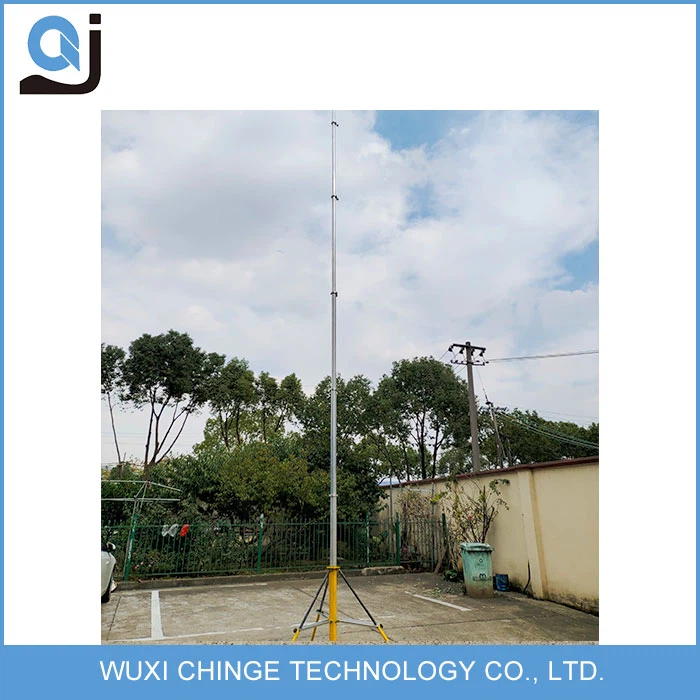
First of all, the material of the pole is crucial. Most antenna push-up poles are made of metal, such as aluminum or steel. Aluminum is a popular choice because it's lightweight and relatively corrosion-resistant. However, in a salt-water environment, even aluminum can start to corrode if not properly protected. Steel, on the other hand, is stronger but more prone to rust.
To combat corrosion, many manufacturers use special coatings on their poles. These coatings act as a barrier between the metal and the salt water, preventing the corrosive process. For example, some poles are coated with a powder coating, which is durable and can withstand harsh conditions. Others may have a galvanized coating, which adds a layer of zinc to the metal surface. This zinc layer corrodes first, protecting the underlying metal.
Another important factor is maintenance. In a salt-water environment, regular maintenance is a must. After every use in salt water, the pole should be rinsed thoroughly with fresh water to remove any salt residues. It's also a good idea to inspect the pole regularly for any signs of corrosion or damage. If corrosion is detected early, it can often be treated to prevent further damage.
In addition to the material and maintenance, the design of the pole also plays a role. A well-designed pole will have features that minimize the contact between the metal and the salt water. For example, it may have sealed joints to prevent water from seeping inside the pole. It may also have a smooth surface to make it easier to clean.
Let's take a look at some real-world examples. Many boat owners use antenna push-up poles to improve their communication and navigation systems. They rely on these poles to work reliably in the harsh marine environment. By choosing a high-quality pole with proper corrosion protection and following a regular maintenance schedule, they can ensure that their poles last for a long time.
Offshore platforms also use antenna push-up poles for various communication and monitoring purposes. These platforms are exposed to the full force of the ocean, so the poles need to be extremely durable. Specialized poles designed for offshore use are often made of high-grade materials and have advanced corrosion protection systems.
Now, I know what you're thinking. "This all sounds great, but how do I choose the right antenna push-up pole for a salt-water environment?" Well, here are some tips:
- Look for poles made of corrosion-resistant materials, such as aluminum with a good coating.
- Check the manufacturer's specifications to see if the pole is designed for salt-water use.
- Ask for recommendations from other users in similar environments.
- Make sure the pole comes with a warranty, so you're covered in case of any issues.
At our company, we offer a range of antenna push-up poles that are suitable for salt-water environments. Our poles are made of high-quality materials and have advanced corrosion protection features. We also provide detailed maintenance instructions to help you keep your pole in top condition.
If you're interested in our products and want to start a purchase negotiation, feel free to reach out to us. We're always happy to answer your questions and provide you with a quote. Just let us know your requirements, and we'll do our best to find the perfect solution for you.
In conclusion, an antenna push-up pole can be used in salt-water environments, but you need to choose the right one and take proper care of it. With the right pole and maintenance, you can enjoy reliable antenna performance even in the harshest marine conditions.
References
- Material Science and Engineering: An Introduction by William D. Callister Jr.
- Handbook of Corrosion Engineering by Shreir, Jaques, and R. A. Jarman