


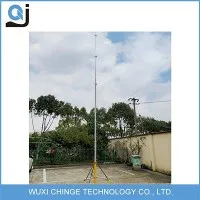
Hey there! As a supplier of crank up poles, I've spent a ton of time analyzing their structure. Let's dig into how to break down the structure of a crank up pole and understand what makes it tick.
First off, what exactly is a crank up pole? Well, it's a type of telescopic mast that can be raised and lowered using a crank mechanism. These poles are super handy in a bunch of different applications, like mounting antennas for radio communication, setting up lights for events, or even for some industrial uses.
Let's start with the basic components of a crank up pole. At its core, it consists of a series of nested tubes. These tubes are usually made of high - strength materials like aluminum or steel. Aluminum is great because it's lightweight, which makes the pole easier to transport and install. On the other hand, steel offers more durability and can handle heavier loads.
The telescoping design is one of the key features of a crank up pole. The smaller tubes fit inside the larger ones, allowing the pole to be extended to different heights. This is where the crank mechanism comes in. The crank is connected to a winch or a gear system. When you turn the crank, it either winds or unwinds a cable or chain that's attached to the inner tubes. As the cable or chain moves, it pulls the inner tubes out, extending the pole upwards.
Now, let's talk about the base of the crank up pole. This is the part that provides stability. It's usually a heavy - duty structure that's either bolted to the ground or mounted on a platform. The base needs to be strong enough to support the weight of the extended pole and any equipment that's attached to it. For example, if you're using the pole to mount a large antenna, the base has to be able to withstand the wind forces acting on the antenna.
Another important aspect is the locking mechanism. Once the pole is extended to the desired height, you need to lock it in place. This is typically done using pins, clamps, or a ratchet system. The locking mechanism ensures that the pole stays at the set height and doesn't collapse unexpectedly.
Let's take a closer look at some of the different types of crank up poles. There's the Mechanical Telescoping Mast. This type uses a simple mechanical system to extend and retract the pole. It's a reliable option for many applications, especially where you don't need a very high - tech solution. The mechanical telescoping mast is easy to operate and maintain, making it a popular choice for small - scale projects.


Then there's the Telescoping Radio Antenna Mast. As the name suggests, this is specifically designed for mounting radio antennas. It's often made with features that reduce interference and provide a stable platform for the antenna. The height of the mast can be adjusted to optimize the signal reception and transmission.
The Winch Up Mast is another variation. It uses a winch to raise and lower the pole. The winch can be powered manually or by an electric motor. Electric winches are great for larger poles or when you need to make quick adjustments.
When analyzing the structure of a crank up pole, it's also important to consider the load - bearing capacity. This depends on several factors, such as the material of the tubes, the design of the base, and the strength of the locking mechanism. You need to make sure that the pole can handle the weight of the equipment you're going to attach to it, as well as any external forces like wind and rain.
Let's talk about the installation process. Installing a crank up pole requires some basic tools and a bit of know - how. First, you need to prepare the base. This might involve digging a hole and pouring concrete if you're mounting it on the ground. Then you assemble the pole sections and attach the crank mechanism. Once the pole is assembled, you can start extending it to the desired height. It's important to follow the manufacturer's instructions carefully during the installation process to ensure that the pole is installed safely and correctly.
Maintenance is also a crucial part of owning a crank up pole. You need to regularly check the cables, chains, and gears for wear and tear. Lubricate the moving parts to keep them running smoothly. Inspect the locking mechanism to make sure it's working properly. And if you notice any signs of damage, such as cracks in the tubes or a loose crank, you should address it immediately.
As a supplier of crank up poles, I've seen firsthand how important it is to have a well - designed and reliable product. Whether you're a small business looking to set up a radio communication system or an event organizer in need of a lighting pole, having the right crank up pole can make all the difference.
If you're in the market for a crank up pole, I'd love to help you find the perfect one for your needs. We offer a wide range of options, from small - scale telescoping masts to large - capacity winch up poles. Our team of experts can assist you in choosing the right product based on your specific requirements. So, don't hesitate to reach out and start a conversation about your crank up pole needs. We're here to make sure you get the best solution for your project.
References
- General knowledge of telescopic mast technology from industry experience.
- Product manuals and specifications from various crank up pole manufacturers.