




Hey there! As a supplier of portable telescopic masts, I often get asked about the shock resistance of these nifty gadgets. So, I thought I'd take a deep dive into this topic and share everything you need to know.
First off, let's understand what a portable telescopic mast is. It's a versatile piece of equipment that can be extended and retracted as needed. You can find them in various applications, like mounting cameras for surveillance, antennas for communication, or lights for illumination. We've got different types on our website, such as the Electric Telescoping Mast, Telescopic Aerial Mast, and Light Tower Mast.
Now, let's talk about shock resistance. Shock resistance refers to the ability of a mast to withstand sudden impacts or vibrations without getting damaged. This is super important, especially when the mast is used in rough or unpredictable environments.
Factors Affecting Shock Resistance
1. Material
The material used to make the mast plays a huge role in its shock resistance. Most of our portable telescopic masts are made from high - strength aluminum alloys. Aluminum is lightweight, which makes the mast easy to transport and set up. At the same time, it has good shock - absorbing properties. When a shock occurs, the aluminum can deform slightly to absorb the energy, preventing it from causing major damage to the mast.
For example, if a mast is accidentally bumped into during transportation or installation, the aluminum structure can take the hit and bounce back to its original shape to a certain extent. In contrast, masts made from brittle materials like some types of plastic would crack or break easily under the same impact.
2. Design
The design of the mast also affects its shock resistance. Our masts are designed with a telescopic structure that allows for flexibility. The multiple sections of the mast can move relative to each other, which helps to distribute the shock energy. When a shock occurs, the energy is spread out over the entire length of the mast instead of being concentrated in one spot.
Moreover, the joints between the sections are carefully engineered. They are designed to be strong enough to hold the mast together under normal conditions but also flexible enough to absorb some of the shock. For instance, we use special locking mechanisms at the joints that can withstand a certain amount of force without coming loose.

3. Internal Components
If the mast has internal components like motors (in the case of electric telescopic masts) or cables, their protection is crucial for shock resistance. We use shock - absorbing mounts for the motors and proper cable management systems. The shock - absorbing mounts isolate the motor from the external shocks, preventing the motor from getting damaged. And the cable management system ensures that the cables are not pulled or twisted during a shock, which could lead to malfunctions.
Testing the Shock Resistance
We don't just claim that our masts have good shock resistance; we test it. We use a variety of methods to simulate real - world shock scenarios. One common test is the drop test. We drop the mast from a certain height onto a hard surface to see how it responds. We measure the amount of damage, if any, and check if the mast can still function properly after the drop.
Another test we do is the vibration test. We place the mast on a vibrating platform and subject it to different frequencies and amplitudes of vibration. This simulates the vibrations that the mast might experience during transportation or when it's installed in an area with a lot of machinery nearby. By monitoring the mast during the vibration test, we can ensure that it can withstand these vibrations without any issues.
Importance of Shock Resistance in Different Applications
1. Surveillance
In surveillance applications, a mast might be installed in an outdoor area where it could be exposed to various shocks. For example, it could be hit by a flying object during a storm or bumped into by a passing vehicle. If the mast doesn't have good shock resistance, it could get damaged, which would affect the performance of the surveillance camera mounted on it. A damaged mast might cause the camera to tilt or shake, resulting in poor - quality footage.
2. Communication
When used for communication purposes, a mast with poor shock resistance could disrupt the signal. The antennas mounted on the mast need to be in a stable position to transmit and receive signals effectively. A shock could cause the antenna to move out of alignment, leading to signal loss or interference. Our shock - resistant masts ensure that the antennas stay in place and the communication system works smoothly.
3. Lighting
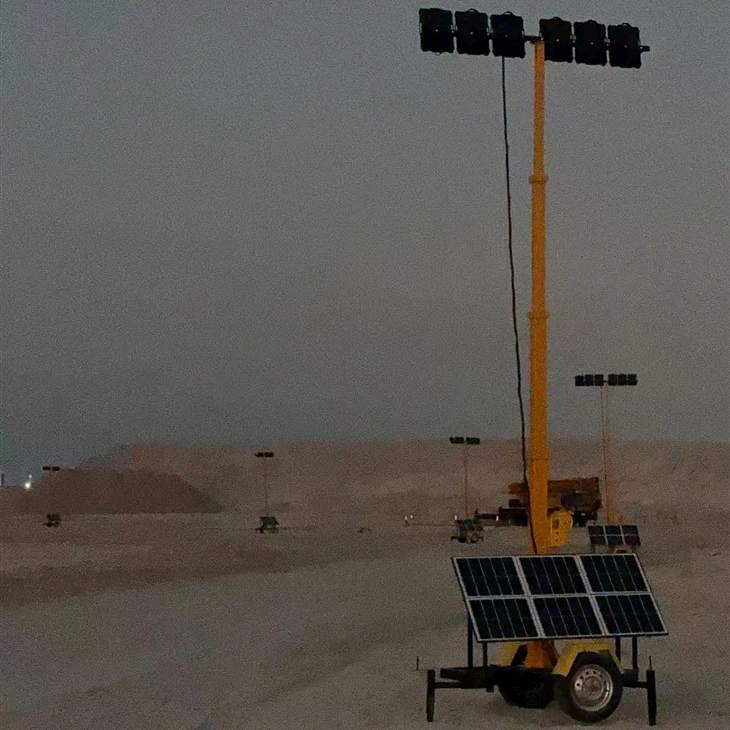
In lighting applications, especially in construction sites or outdoor events, the mast might be subject to shocks from heavy machinery or people moving around. A shock - resistant mast ensures that the lights stay on and in the right position. If the mast gets damaged, the lights could fall or break, which would not only be a safety hazard but also disrupt the lighting setup.
How We Ensure High - Quality Shock Resistance
We have a strict quality control process. From the selection of raw materials to the final assembly, every step is carefully monitored. We work with trusted suppliers to get the best - quality aluminum alloys. Our manufacturing team follows strict standards to ensure that the masts are made with precision.
After production, each mast goes through a series of inspections. We check the material quality, the integrity of the joints, and the functionality of the internal components. Only when a mast passes all these inspections can it be shipped to our customers.
Conclusion
In conclusion, the shock resistance of a portable telescopic mast is a crucial factor that determines its durability and performance. At our company, we understand the importance of shock resistance, and we've taken every measure to ensure that our masts can withstand the toughest conditions. Whether you're using the mast for surveillance, communication, or lighting, you can count on our masts to perform reliably.
If you're interested in our portable telescopic masts and want to learn more about their shock resistance or other features, feel free to get in touch with us. We're always happy to answer your questions and discuss your specific requirements. Let's work together to find the perfect mast solution for you!
References
- "Engineering Materials and Their Applications" by William D. Callister, Jr. and David G. Rethwisch
- Industry standards for portable telescopic masts published by relevant trade organizations.