




Hey there! I'm a supplier of cell sites on wheels, and today I'm gonna chat about how these nifty contraptions handle call handovers. It's a pretty cool topic, and I'm excited to share some insights with you.
First off, let's quickly go over what a cell site on wheels is. It's basically a mobile cell tower that can be driven to different locations as needed. This is super handy in situations like emergency response, large events, or areas with temporary high traffic. You can check out more about it on our Cell Tower On Wheels page.
So, what's a call handover? Well, when you're on a call and you move from one cell's coverage area to another, your call needs to smoothly transfer from the old cell to the new one. This is called a call handover. If it's not done right, you might experience dropped calls or poor call quality.
Now, how does a cell site on wheels handle these handovers?
1. Signal Monitoring
The first step in handling call handovers is constant signal monitoring. The cell site on wheels is equipped with advanced sensors that keep an eye on the signal strength of both its own cell and the neighboring cells. This is crucial because it helps the system decide when a handover is necessary.
For example, if you're moving away from the cell site on wheels and the signal strength from its antenna starts to weaken, while the signal from a neighboring cell gets stronger, the system will start preparing for a handover. Our Mobile Trailer Tower 30m is designed with top - notch signal monitoring capabilities to ensure this process is as accurate as possible.
2. Handover Decision - Making
Once the signal monitoring indicates that a handover might be needed, the cell site on wheels uses a set of algorithms to make the handover decision. These algorithms take into account multiple factors, not just signal strength.
They also consider things like the traffic load on the neighboring cells. If a neighboring cell is already overloaded with calls, it might not be the best choice for a handover, even if its signal is strong. The cell site on wheels will analyze all these factors in real - time and decide whether to initiate a handover and which cell to hand the call over to.
3. Communication with Neighboring Cells
After the decision to hand over a call is made, the cell site on wheels needs to communicate with the neighboring cell. This is done through a series of protocols and interfaces.
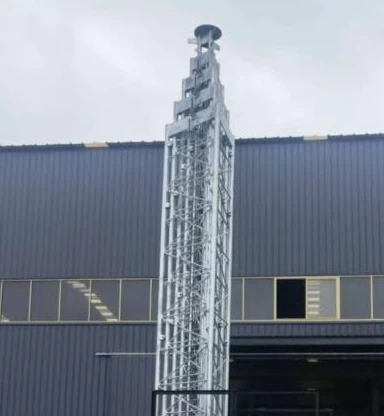

The cell site on wheels sends a request to the target cell, providing all the necessary information about the call, such as the call ID, the user's profile, and the current call status. The target cell then checks if it can accept the call. If it can, it sends an acknowledgment back to the cell site on wheels, and the handover process can proceed. This seamless communication is what makes our Communication On Wheels solution so effective.
4. Call Transfer
Once the target cell has accepted the call, the actual call transfer takes place. The cell site on wheels gradually reduces its transmission power for the call, while the target cell starts increasing its power to take over the call.
This transition needs to be very smooth to avoid any disruptions to the call. The system also needs to ensure that all the call - related data, like voice packets, are transferred correctly from the old cell to the new one.
5. Verification and Follow - up
After the call has been transferred, the cell site on wheels verifies that the handover was successful. It checks if the call is still active on the target cell and if the call quality is good.
If there are any issues, such as a dropped call or poor quality, the system will try to rectify the situation. It might attempt to re - handover the call to another cell or take other corrective measures.
Challenges in Call Handovers for Cell Sites on Wheels
Of course, handling call handovers with a cell site on wheels isn't without its challenges.
One major challenge is the mobility of the cell site itself. Since it can be moved to different locations, the neighboring cells it interacts with can change frequently. This means the system needs to be very flexible and adaptable. It has to quickly learn about the new neighboring cells, their characteristics, and the handover protocols they support.
Another challenge is dealing with high - speed movement. If the vehicle carrying the cell site on wheels is moving at a high speed, the signal conditions can change very rapidly. This makes it more difficult to accurately monitor the signals and make timely handover decisions.
Our Solutions to the Challenges
As a supplier, we've developed several solutions to tackle these challenges.
We've built our cell sites on wheels with highly flexible software that can quickly adapt to different network environments. The software can automatically detect and learn about new neighboring cells, and it can adjust the handover algorithms accordingly.
To deal with high - speed movement, we've incorporated advanced signal processing techniques. These techniques can filter out the noise caused by the movement and provide more accurate signal strength measurements. This allows the system to make better handover decisions even in high - speed scenarios.
Why Choose Our Cell Sites on Wheels for Call Handovers
There are several reasons why our cell sites on wheels are a great choice when it comes to handling call handovers.
Firstly, our equipment is built with the latest technology. We use state - of - the - art sensors, algorithms, and communication protocols to ensure that call handovers are as smooth and reliable as possible.
Secondly, we offer excellent support. Our team of experts is always on standby to assist with any issues related to call handovers or the operation of the cell site on wheels.
Finally, our products are highly customizable. Whether you need a cell site on wheels for a small event or a large - scale emergency response, we can tailor our solutions to meet your specific requirements.
If you're interested in learning more about our cell sites on wheels and how they can handle call handovers for your needs, we'd love to have a chat with you. Just reach out to us, and we can start a discussion about your project and see how we can help.
References
- Telecom Engineering Handbook, various editions
- Mobile Network Optimization: Principles and Practice, authors from the telecom industry