




Network congestion is a persistent challenge in the ever - expanding digital landscape, especially in areas with high population density or during large - scale events. As a supplier of cell towers on wheels, I've witnessed firsthand how these mobile solutions can effectively tackle network congestion. In this blog, I'll delve into the mechanisms and strategies behind how cell towers on wheels handle this critical issue.
Understanding Network Congestion
Before we explore how cell towers on wheels address network congestion, it's essential to understand what causes it. Network congestion occurs when the demand for data transmission exceeds the network's capacity. This can happen in densely populated urban areas, where thousands of people are using their devices simultaneously. Large - scale events such as concerts, sports games, or festivals also put an enormous strain on local networks. When too many users try to connect to the same cell tower or access the same bandwidth, the network slows down, leading to dropped calls, slow data speeds, and poor user experience.
Another factor contributing to network congestion is the growth of data - intensive applications. With the rise of streaming services, video conferencing, and online gaming, the amount of data being transmitted over mobile networks has skyrocketed. Traditional fixed cell towers may not be able to handle this sudden surge in demand, resulting in congestion.
How Cell Towers on Wheels Work
Cell towers on wheels, also known as [Cell Site On Wheels]( /cell - on - wheels/cell - site - on - wheels - factory.html), are mobile communication units that can be quickly deployed to areas experiencing network congestion. These units are mounted on trailers or trucks, allowing them to be easily transported to the required location.
The key advantage of cell towers on wheels is their mobility. Unlike traditional fixed cell towers, which take months or even years to plan, build, and install, cell towers on wheels can be on - site and operational within hours. This rapid deployment capability makes them an ideal solution for temporary network congestion issues, such as those occurring during special events.
Cell towers on wheels are equipped with all the necessary components to establish a functional cell site. They have antennas, transmitters, receivers, and base station equipment, just like a regular cell tower. However, they are designed to be compact and easily transportable. Some of our popular models, like the [Mobile Trailer Tower 30m]( /cell - on - wheels/mobile - trailer - tower - 30m.html), offer a high - performance solution with a 30 - meter tower, providing excellent coverage over a large area.
Strategies for Dealing with Network Congestion
Capacity Expansion
One of the primary ways cell towers on wheels deal with network congestion is by expanding the network capacity. When a fixed cell tower is overloaded, a cell tower on wheels can be deployed nearby to share the traffic. This additional capacity allows more users to connect to the network simultaneously, reducing congestion and improving the overall quality of service.
For example, during a large music festival, the local cell tower may be unable to handle the thousands of attendees trying to use their phones for social media, streaming music, or making calls. By deploying a cell tower on wheels at the festival site, the network operator can significantly increase the available bandwidth, ensuring that festival - goers can stay connected without experiencing slow speeds or dropped connections.
Load Balancing
Load balancing is another crucial strategy in managing network congestion. Cell towers on wheels can be used to redistribute the traffic across multiple cell sites. By analyzing the network traffic patterns, the network operator can determine which areas are experiencing high demand and deploy cell towers on wheels accordingly.
For instance, in a busy downtown area with multiple office buildings, the network traffic may be concentrated during peak business hours. A cell tower on wheels can be moved to the area with the highest traffic density to balance the load. This not only reduces congestion but also optimizes the use of network resources.
Temporary Coverage
In some cases, network congestion may be due to a lack of coverage in a particular area. Cell towers on wheels can provide temporary coverage in areas where fixed cell towers are not available or are insufficient. This is especially useful in remote locations, construction sites, or disaster - affected areas.
Our [Open Trailer Towers Cell On Wheels]( /cell - on - wheels/open - trailer - towers - cell - on - wheels.html) are designed to offer flexible and reliable temporary coverage. They can be quickly set up and adjusted to provide the best possible signal strength in the target area. For example, in a rural area where a natural disaster has damaged the existing cell infrastructure, a cell tower on wheels can be deployed to restore communication services.
Technical Features that Aid in Congestion Management
Advanced Antenna Technology
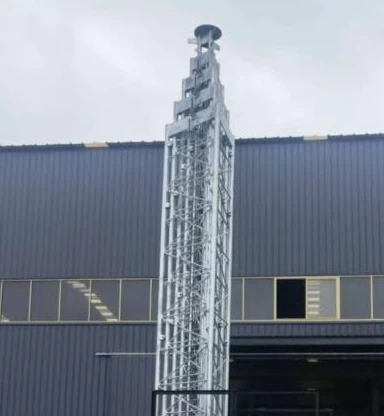
Cell towers on wheels are often equipped with advanced antenna technology to enhance signal strength and coverage. Multiple - input multiple - output (MIMO) antennas, for example, can transmit and receive multiple data streams simultaneously, increasing the data capacity of the network. These antennas can also be adjusted to focus the signal in specific directions, allowing for more efficient use of the available bandwidth.
High - Performance Base Stations
The base stations on cell towers on wheels are designed to handle high volumes of traffic. They are equipped with powerful processors and advanced software algorithms that can optimize the network performance. These base stations can also be configured to support different wireless standards, such as 4G and 5G, ensuring compatibility with a wide range of devices.
Remote Monitoring and Management
To ensure the efficient operation of cell towers on wheels, remote monitoring and management systems are used. These systems allow network operators to monitor the performance of the cell tower in real - time, including signal strength, traffic volume, and equipment status. If any issues are detected, the operator can make adjustments remotely or dispatch maintenance personnel to the site.
Real - World Examples
Let's take a look at some real - world examples of how cell towers on wheels have successfully dealt with network congestion.
During the Olympics, which attract a large number of athletes, spectators, and media personnel, network congestion is a significant concern. Mobile operators often deploy cell towers on wheels at the Olympic venues to ensure seamless communication. These mobile units provide additional capacity and coverage, allowing athletes to stay connected with their teams, spectators to share their experiences on social media, and media outlets to broadcast live events.

In a large - scale construction project, where hundreds of workers are using mobile devices for communication and access to project management applications, network congestion can disrupt the workflow. By deploying a cell tower on wheels at the construction site, the project manager can ensure that the workers have reliable network connectivity, improving productivity and safety.
Conclusion
Cell towers on wheels are a powerful solution for dealing with network congestion. Their mobility, rapid deployment capability, and advanced technical features make them an indispensable tool for network operators. Whether it's expanding network capacity, balancing the load, or providing temporary coverage, cell towers on wheels can effectively address the challenges posed by network congestion.
If you're facing network congestion issues and are looking for a reliable and flexible solution, I encourage you to consider our cell towers on wheels. We offer a wide range of products, including the [Mobile Trailer Tower 30m]( /cell - on - wheels/mobile - trailer - tower - 30m.html), [Cell Site On Wheels]( /cell - on - wheels/cell - site - on - wheels - factory.html), and [Open Trailer Towers Cell On Wheels]( /cell - on - wheels/open - trailer - towers - cell - on - wheels.html). Our team of experts can help you choose the right solution for your specific needs. Contact us to start a procurement discussion and take the first step towards solving your network congestion problems.
References
- Andrews, J. G., Buzzi, S., Choi, W., Hanly, S. V., Lozano, A., Soong, A. C. K., & Zhang, J. C. (2014). What will 5G be? IEEE Journal on Selected Areas in Communications, 32(6), 1065 - 1082.
- Rappaport, T. S., Sun, S., Mayzus, R., Zhao, H., Azar, Y., Wang, K.,... & Heath Jr, R. W. (2013). Millimeter wave mobile communications for 5G cellular: It will work! IEEE Access, 1, 335 - 349.
- Tanenbaum, A. S., & Wetherall, D. J. (2011). Computer Networks (4th ed.). Pearson.