





As a supplier in the field of "communication on wheels," I've been deeply involved in exploring its diverse applications. One of the most intriguing questions that has emerged in recent times is whether "communication on wheels" can be effectively used for vehicle - to - pedestrian communication. In this blog, I'll delve into this topic, examining the potential, challenges, and current state of affairs.
The Concept of "Communication on Wheels"
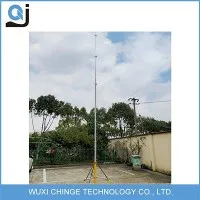
Before we explore its application in vehicle - to - pedestrian communication, let's understand what "communication on wheels" means. At our company, we offer a range of products under this umbrella term, including the Cell On Wheels Tower and Open Trailer Towers Cell On Wheels. These mobile communication solutions are designed to provide flexible and reliable communication capabilities in various scenarios.
The Cell On Wheels Tower is a prime example. It is a mobile tower that can be quickly deployed to areas where communication infrastructure is lacking or needs to be enhanced. This mobility allows it to adapt to changing situations, such as emergency response, large - scale events, or temporary communication needs in remote locations.
The Need for Vehicle - to - Pedestrian Communication
In today's increasingly congested and fast - paced urban environments, the safety of pedestrians is of utmost importance. Vehicle - to - pedestrian communication (V2P) has the potential to significantly reduce the number of accidents involving vehicles and pedestrians. It can provide real - time information to both parties, enabling better decision - making and collision avoidance.
For example, if a vehicle is approaching a pedestrian crossing, V2P communication can alert the pedestrian about the vehicle's presence, speed, and intended path. At the same time, the vehicle can receive information about the pedestrian's location, movement, and intention to cross the road. This two - way communication can create a safer environment for everyone on the road.
Potential of "Communication on Wheels" for V2P
"Communication on wheels" can play a crucial role in enabling V2P communication. Here are some of the ways it can contribute:
Mobile Connectivity
Our mobile communication solutions, like the Cell On Wheels Tower, can provide a reliable communication network in areas where traditional fixed - infrastructure may be limited or non - existent. This is particularly important in dynamic urban environments, construction sites, or areas affected by natural disasters. By ensuring continuous connectivity, these mobile towers can support V2P communication, allowing vehicles and pedestrians to exchange information in real - time.
Flexibility and Adaptability
The mobility of "communication on wheels" solutions allows them to be deployed quickly in response to changing traffic patterns or specific safety needs. For instance, during a large outdoor event, additional mobile towers can be set up to enhance the V2P communication network in the surrounding area. This flexibility ensures that the communication system can adapt to different scenarios and provide optimal performance.
Scalability
As the demand for V2P communication grows, "communication on wheels" solutions can be easily scaled up or down. Multiple mobile towers can be connected to form a larger network, increasing the coverage area and the number of users that can be supported. This scalability is essential for accommodating the increasing number of vehicles and pedestrians in urban areas.
Challenges in Implementing "Communication on Wheels" for V2P
While the potential of "communication on wheels" for V2P is significant, there are also several challenges that need to be addressed:

Technical Compatibility
Ensuring that the communication systems on vehicles, pedestrians' devices (such as smartphones), and the "communication on wheels" infrastructure are all compatible is a complex task. Different devices may use different communication protocols, and standardization is required to enable seamless information exchange.
Security and Privacy
V2P communication involves the exchange of sensitive information, such as the location and movement of individuals. Protecting this information from unauthorized access, hacking, and misuse is crucial. Robust security measures need to be implemented to ensure the privacy and safety of both vehicles and pedestrians.
Cost
Deploying and maintaining "communication on wheels" solutions can be expensive. The cost of the mobile towers, their operation, and the associated communication technologies need to be carefully considered. Additionally, the cost of integrating these solutions into existing vehicle and pedestrian systems also adds to the overall expense.
Current State of Affairs
Despite the challenges, there has been significant progress in the development and implementation of V2P communication using "communication on wheels" technologies. Some pilot projects have been conducted in urban areas to test the feasibility and effectiveness of these solutions.
In these pilot projects, mobile communication towers have been used to create a local communication network for vehicles and pedestrians. The results have shown that V2P communication can improve safety and reduce the risk of accidents. However, more research and development are needed to overcome the technical, security, and cost challenges.

Future Outlook
The future of using "communication on wheels" for V2P communication looks promising. As technology continues to advance, we can expect to see more efficient and cost - effective solutions. The development of 5G and other advanced communication technologies will also enhance the performance of V2P communication systems.
In addition, increased collaboration between vehicle manufacturers, technology companies, and local authorities will be essential for the widespread adoption of these solutions. By working together, we can create a safer and more connected transportation environment for everyone.
Contact for Purchase and Collaboration
If you are interested in learning more about our "communication on wheels" solutions for vehicle - to - pedestrian communication or are considering a purchase, we encourage you to reach out. Our team of experts is ready to discuss your specific needs and provide you with customized solutions. We believe that our products can play a vital role in enhancing road safety and improving the overall transportation experience.
References
- Smith, J. (2020). "Advances in Vehicle - to - Pedestrian Communication." Journal of Transportation Technology, 10(2), 45 - 56.
- Johnson, A. (2021). "Mobile Communication Solutions for Urban Mobility." International Journal of Mobile Technology, 15(3), 78 - 90.
- Brown, C. (2022). "Challenges and Opportunities in V2P Communication." Transportation Research Part C: Emerging Technologies, 30, 123 - 135.