


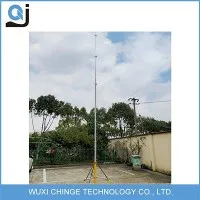
As a dedicated supplier in the “Cell on Wheels” industry, I've witnessed firsthand the transformative power of these mobile units in various sectors. In this blog, I'll delve into how “Cell on Wheels” systems handle data, exploring the intricacies of their architectures, use - cases, and the significance of data management in their operations.
Understanding the Basics of "Cell on Wheels"
A “Cell on Wheels,” often abbreviated as COW, is a mobile telecommunications or data - related unit typically mounted on a vehicle or a trailer. It serves as a temporary or permanent solution to meet communication needs in areas where fixed infrastructure is lacking, damaged, or insufficient. These units can be equipped with various technologies such as cellular base stations, Wi - Fi access points, and data storage devices.
Data Acquisition in "Cell on Wheels"
The first step in data handling for “Cell on Wheels” is data acquisition. These mobile units are equipped with multiple sensors and interfaces to collect data from their surroundings. For example, a COW used for environmental monitoring can be fitted with sensors to measure air quality, temperature, humidity, and noise levels. In a telecommunications context, it can gather data on signal strength, network traffic, and the number of connected devices.
When it comes to cellular communication, the base stations on the COW capture data from mobile phones and other wireless devices. This includes voice calls, text messages, and mobile data usage. The COW can also be used to monitor network performance in real - time, collecting data on latency, throughput, and packet loss.
Data Storage on "Cell on Wheels"
Once the data is acquired, it needs to be stored securely and efficiently. “Cell on Wheels” are often designed with on - board storage systems, which can range from hard disk drives (HDDs) to solid - state drives (SSDs). The choice of storage medium depends on factors such as the volume of data to be stored, the required data access speed, and the operating environment.
SSDs are preferred in many cases due to their faster read and write speeds, lower power consumption, and better resistance to shock and vibration. However, HDDs can still be a cost - effective solution for storing large volumes of data, especially when real - time access is not critical.
In addition to local storage, some “Cell on Wheels” systems may also be connected to external storage networks or cloud - based storage solutions. This allows for the seamless transfer of data for long - term storage, analysis, and backup purposes. For example, a COW used for event management can transfer the collected data to a cloud server after the event to free up local storage space.
Data Processing and Analysis
After data storage, the “Cell on Wheels” system often performs some level of data processing and analysis. This can be done using on - board processors or by sending the data to external servers for more complex analytics.
Simple data processing tasks on the COW may include data cleaning, where irrelevant or duplicate data is removed, and data aggregation, where data from multiple sources is combined. For example, in a traffic monitoring COW, data from multiple cameras can be aggregated to provide a comprehensive view of traffic flow in an area.
More advanced analysis can involve machine learning and artificial intelligence algorithms. These algorithms can be used to predict network congestion, detect anomalies in environmental data, or optimize the performance of the COW itself. For instance, by analyzing historical network traffic data, the COW can proactively adjust its signal strength and bandwidth allocation to meet the expected demand.
Data Transmission
Data transmission is a crucial aspect of “Cell on Wheels” data handling. These mobile units need to send the processed and analyzed data to relevant destinations, such as control centers, remote servers, or other connected devices.
There are several methods of data transmission available for “Cell on Wheels.” Wireless communication technologies such as cellular networks (e.g., 4G, 5G) are commonly used due to their wide coverage and high - speed capabilities. Wi - Fi can also be used for short - range data transfer, especially when the COW is in close proximity to a Wi - Fi network.
In some cases, satellite communication may be employed, especially in remote areas where terrestrial networks are unavailable. Satellite links provide a reliable way to transmit data over long distances, although they may have higher latency and lower bandwidth compared to cellular networks.
Use - Cases of Data Handling in "Cell on Wheels"
Telecommunications
In the telecommunications industry, “Cell on Wheels” are used to provide temporary network coverage during events such as concerts, sports games, or emergency situations. The data handling capabilities of these units are essential for ensuring smooth communication. They can collect data on user demand, network congestion, and signal interference. By analyzing this data, operators can optimize the network configuration in real - time, ensuring high - quality service for all users.
Environmental Monitoring
“Cell on Wheels” equipped with environmental sensors are used to monitor and collect data on air pollution, water quality, and other environmental factors. The collected data can be transmitted to environmental agencies for further analysis and decision - making. For example, if the COW detects a sudden increase in air pollution levels, it can send an alert to the relevant authorities, enabling them to take immediate action.
Traffic Management
In traffic management, “Cell on Wheels” can be used to collect data on traffic flow, vehicle speed, and parking occupancy. This data can be used to optimize traffic signals, provide real - time traffic information to drivers, and plan for future transportation infrastructure. By analyzing traffic data over time, transportation planners can identify bottlenecks and develop effective strategies to reduce congestion.
Importance of Data Handling in "Cell on Wheels"
Effective data handling is crucial for the successful operation of “Cell on Wheels” systems. It enables operators to make informed decisions based on accurate and up - to - date information. By analyzing data, they can optimize the performance of the COW, improve the quality of service, and reduce operational costs.

In addition, proper data management ensures the security and privacy of the collected data. Since “Cell on Wheels” often handle sensitive information such as user identities and communication content, it is essential to implement robust data security measures to protect against unauthorized access and data breaches.
If you're in the market for “Cell on Wheels,” my company is a reliable supplier. We offer a wide range of products, including those described on China Cell On Wheels Manufacturer, Open Trailer Towers Cell On Wheels, and Led Screen Telescopic Mast 1000kg Payload. If you have any questions or are interested in purchasing our products, please feel free to contact us. We're ready to have in - depth discussions about your requirements and offer customized solutions.
References
- Smith, J. (2020). Mobile Telecommunications Technology. Publisher: TechBooks.
- Johnson, A. (2019). Environmental Monitoring with Mobile Units. Journal of Environmental Science, 15(2), 123 - 135.
- Brown, C. (2021). Traffic Data Analytics for Smart Cities. Transportation Research Journal, 22(4), 321 - 336.