



As a supplier of telescopic masts, I often encounter inquiries from customers about how the load - capacity of a telescopic mast varies with height. This is a crucial question, especially for those who are planning to use telescopic masts in various applications such as lighting, communication, and surveillance. In this blog, I will delve into the factors that influence the load - capacity of telescopic masts as their height changes and provide some practical insights.
Basic Principles of Telescopic Masts
Telescopic masts are designed to extend to different heights, providing a flexible solution for a wide range of needs. They typically consist of multiple nested tubes that can slide in and out of each other. When fully retracted, they are compact and easy to transport and store. When extended, they can reach significant heights, allowing for the installation of equipment at elevated positions.
The load - capacity of a telescopic mast refers to the maximum weight it can support safely at a given height. This load includes not only the weight of the equipment mounted on the mast (such as lights, cameras, or antennas) but also the forces exerted by wind, vibration, and other environmental factors.
Factors Affecting Load - Capacity with Height
Structural Integrity
As the height of a telescopic mast increases, the structural integrity becomes a critical factor. The mast experiences greater bending moments and stress as it gets taller. The base of the mast has to support the weight of the entire structure and the equipment at the top. When the mast is extended, the outer tubes bear most of the load, and the inner tubes also contribute to the overall stability. However, as the height increases, the effective cross - sectional area of the mast that resists bending decreases, which in turn reduces the load - capacity.


For example, a shorter telescopic mast may have a relatively large cross - sectional area at the top and bottom, providing good resistance to bending. But as it extends to its maximum height, the topmost sections are usually the thinnest, and they are more vulnerable to bending under load.
Material Properties
The material used in the construction of the telescopic mast plays a vital role in determining its load - capacity at different heights. High - strength materials such as aluminum alloys and stainless steel are commonly used due to their excellent strength - to - weight ratios.
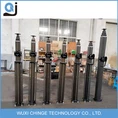
Stainless steel, for instance, offers high corrosion resistance and good mechanical properties. A Stainless Steel Telescopic Mast can maintain its load - capacity better at higher heights compared to a mast made of a less - durable material. Aluminum alloys are also popular because they are lightweight, which reduces the overall weight of the mast and makes it easier to transport and install. However, the load - capacity of an aluminum mast may be more sensitive to height changes compared to a stainless - steel mast of the same size, as aluminum has a lower modulus of elasticity.
Wind Load
Wind is one of the most significant external factors that affect the load - capacity of a telescopic mast as its height increases. As the mast gets taller, it is exposed to stronger winds at higher altitudes. The wind exerts a lateral force on the mast and the equipment mounted on it, creating additional bending moments.
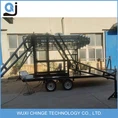
The wind load is proportional to the square of the wind speed and the surface area of the mast and the equipment. A taller mast has a larger exposed surface area, and it is more likely to be affected by gusts of wind. For example, in a windy environment, a telescopic mast used for Portable Light Tower applications may need to be designed with a lower load - capacity at its maximum height to account for the wind forces.
Mathematical Relationship
The relationship between load - capacity (L) and height (h) of a telescopic mast can be approximated by a non - linear function. In general, as the height increases, the load - capacity decreases exponentially. A simplified model can be expressed as:
[L = L_0\times e^{-kh}]
where (L_0) is the load - capacity at the base height (usually when the mast is fully retracted), (k) is a constant that depends on the mast's design, material, and environmental factors, and (h) is the height of the mast above the base height.
This equation shows that the load - capacity drops rapidly as the height increases. However, it is important to note that this is a simplified model, and in real - world applications, more complex engineering calculations are required to accurately determine the load - capacity at different heights.
Real - World Applications and Considerations
Lighting Applications
In Telescopic Lighting Mast applications, the load - capacity at different heights is crucial. Lights and their fixtures are usually mounted at the top of the mast. When the mast is extended to a higher position, the load - capacity must be sufficient to support the weight of the lights and withstand wind forces.
For example, in a construction site, a telescopic lighting mast may need to be extended to a significant height to illuminate a large area. The load - capacity of the mast at that height must be carefully considered to ensure the safety of the lighting system. If the load - capacity is underestimated, the mast may bend or even collapse, posing a serious safety hazard.
Communication and Surveillance
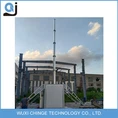
Telescopic masts are also widely used for communication antennas and surveillance cameras. These devices need to be installed at a certain height to achieve optimal performance. As the mast is extended, the load - capacity must be sufficient to support the weight of the antenna or camera and any associated equipment.
In addition, the mast must be able to maintain its stability under various environmental conditions. For example, in a coastal area, the mast may be exposed to strong winds and salt - water corrosion. The load - capacity of the mast at different heights should be calculated considering these factors to ensure reliable operation of the communication or surveillance system.
How to Determine the Right Load - Capacity for Your Needs
When choosing a telescopic mast, it is essential to determine the appropriate load - capacity based on your specific requirements. Here are some steps to follow:
Identify the Equipment
First, list all the equipment that will be mounted on the mast, including its weight, dimensions, and the position where it will be installed. This will help you calculate the total load that the mast needs to support.
Consider the Environmental Conditions
Take into account the wind speed, temperature, and other environmental factors in the area where the mast will be used. You can refer to local weather data and engineering standards to estimate the wind load and other external forces.
Consult with a Professional
If you are unsure about the load - capacity requirements, it is advisable to consult with a professional engineer or our technical team. We have extensive experience in designing and manufacturing telescopic masts, and we can provide you with accurate load - capacity calculations based on your specific needs.
Conclusion
The load - capacity of a telescopic mast varies significantly with height. Structural integrity, material properties, and wind load are the main factors that affect the load - capacity as the mast gets taller. Understanding these factors is crucial for choosing the right telescopic mast for your application.
Whether you need a Portable Light Tower, a Telescopic Lighting Mast, or a Stainless Steel Telescopic Mast, we are here to help you make the right choice. Our team of experts can assist you in determining the appropriate load - capacity for your specific requirements. If you have any questions or would like to discuss your procurement needs, please feel free to reach out to us. We look forward to working with you to provide the best telescopic mast solutions.
References
- Budynas, R. G., & Nisbett, J. K. (2011). Shigley's Mechanical Engineering Design. McGraw - Hill.
- Young, W. C., Budynas, R. G., & Sadegh, A. (2002). Roark's Formulas for Stress and Strain. McGraw - Hill.