


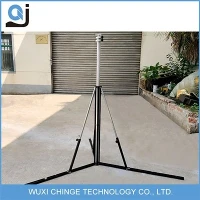


As a trusted supplier of Tripod Telescoping Masts, I've witnessed firsthand the diverse applications and the growing demand for these versatile structures. In this blog, I'll delve into the fascinating world of tripod telescoping masts and explain in detail how their telescoping mechanism operates.
The Basics of a Tripod Telescoping Mast
Before we explore the telescoping mechanism, let's understand what a tripod telescoping mast is. It is a type of mast that consists of multiple tubular sections, usually made of lightweight and durable materials such as aluminum or fiberglass. These sections are nested within each other and can be extended or retracted to adjust the height of the mast. The mast is supported by a tripod base, which provides stability and ensures that the mast can stand upright even in challenging environments.
Tripod telescoping masts are widely used in various industries and applications, including telecommunications, surveillance, photography, and event management. They are particularly useful when a temporary or portable height adjustment is required, as they can be easily transported and set up at different locations.
The Telescoping Mechanism: How It Works
The telescoping mechanism of a tripod telescoping mast is designed to allow for smooth and controlled extension and retraction of the mast sections. There are several different types of telescoping mechanisms available, each with its own advantages and disadvantages. Here are some of the most common types:


Manual Telescoping Mechanisms
- Hand Push Up Telescopic Mast: This is one of the simplest and most straightforward telescoping mechanisms. With a Hand Push Up Telescopic Mast, the user manually pushes the mast sections upward to extend the mast. The sections are usually locked in place using a series of locking collars or pins. To retract the mast, the user simply releases the locking mechanism and pulls the sections back down. This type of mechanism is ideal for small to medium-sized masts that require relatively low extension heights.
- Aluminum Crank Up Mast: Another popular manual telescoping mechanism is the Aluminum Crank Up Mast. This type of mast uses a crank handle to turn a spindle, which in turn raises or lowers the mast sections. The spindle is usually connected to a system of gears or pulleys that provide mechanical advantage, making it easier for the user to crank the mast up or down. This mechanism is more suitable for larger masts that require higher extension heights, as it provides more control and stability compared to the hand push up mechanism.
Motorized Telescoping Mechanisms
- Motorized Telescoping Mast: For applications that require frequent or rapid height adjustments, a Motorized Telescoping Mast is the ideal choice. This type of mast uses an electric motor to power the telescoping mechanism, allowing for quick and easy extension and retraction of the mast sections. The motor is usually controlled by a remote control or a switch, which gives the user precise control over the height of the mast. Motorized telescoping masts are commonly used in applications such as surveillance systems, where the ability to quickly adjust the height of the camera is essential.
- Hand Winch Up Telescopic Mast: A Hand Winch Up Telescopic Mast is another type of motorized telescoping mechanism that uses a hand winch to raise and lower the mast sections. The hand winch is connected to a cable or a chain, which is attached to the top of the mast. By turning the hand winch, the user can pull the cable or chain, causing the mast sections to extend or retract. This type of mechanism is often used in applications where a motorized system is not available or practical, such as in remote locations or in areas with limited power supply.
Factors Affecting the Operation of the Telescoping Mechanism
Several factors can affect the operation of the telescoping mechanism of a tripod telescoping mast. Here are some of the most important ones:
Material and Construction
The material and construction of the mast sections play a crucial role in the performance of the telescoping mechanism. High-quality materials such as aluminum or fiberglass are lightweight, strong, and resistant to corrosion, which makes them ideal for use in telescoping masts. The mast sections should also be precisely machined and assembled to ensure a smooth and tight fit, which is essential for the proper operation of the telescoping mechanism.
Lubrication
Proper lubrication is essential for the smooth operation of the telescoping mechanism. The mast sections should be lubricated regularly to reduce friction and wear, which can cause the mechanism to jam or malfunction. The type of lubricant used will depend on the material of the mast sections and the operating environment. For example, in a dusty or dirty environment, a dry lubricant may be more suitable, while in a wet or humid environment, a grease lubricant may be preferred.
Load Capacity
The load capacity of the tripod telescoping mast is another important factor to consider. The mast should be able to support the weight of the equipment or payload that will be mounted on it, as well as any additional forces such as wind or vibration. Overloading the mast can cause the telescoping mechanism to fail or damage the mast sections, which can be dangerous and costly to repair.
Maintenance
Regular maintenance is essential for the long-term performance and reliability of the tripod telescoping mast. The mast should be inspected regularly for signs of wear, damage, or corrosion, and any issues should be addressed promptly. The telescoping mechanism should also be lubricated and adjusted as needed to ensure smooth operation.
Advantages of Using a Tripod Telescoping Mast
There are several advantages to using a tripod telescoping mast, including:
- Portability: Tripod telescoping masts are lightweight and easy to transport, making them ideal for use in temporary or mobile applications.
- Adjustability: The telescoping mechanism allows for easy and precise height adjustment, which makes the mast suitable for a wide range of applications.
- Stability: The tripod base provides excellent stability, even in windy or uneven terrain, which ensures that the mast can stand upright and support the load.
- Versatility: Tripod telescoping masts can be used in a variety of industries and applications, including telecommunications, surveillance, photography, and event management.
Conclusion
The telescoping mechanism of a tripod telescoping mast is a complex and sophisticated system that allows for smooth and controlled extension and retraction of the mast sections. By understanding how this mechanism works and the factors that affect its operation, you can choose the right type of mast for your specific application and ensure its long-term performance and reliability.
If you're in the market for a high-quality tripod telescoping mast, we invite you to explore our range of products, including Motorized Telescoping Mast, Hand Winch Up Telescopic Mast, Portable Telescoping Mast, Aluminum Crank Up Mast, and Hand Push Up Telescopic Mast. Our team of experts is always on hand to provide you with professional advice and support, so please feel free to contact us to discuss your requirements. We look forward to working with you to find the perfect solution for your needs.