


Hey there! I'm a supplier of cell sites on wheels, and one question I get asked a lot is, "How fast can a cell site on wheels be set up?" Well, let's dive right into it and break down the factors that influence the setup time.
Understanding Cell Sites on Wheels
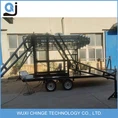
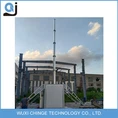
First off, for those who aren't familiar, a cell site on wheels, also known as a COW (Cell On Wheels), is a mobile communication unit that can be quickly deployed to provide temporary or emergency cellular coverage. It's like a mini - cell tower on a truck or trailer, which is super handy in situations like festivals, natural disasters, or when there's a sudden spike in demand for mobile data. You can learn more about it on our COW Cell On Wheels page.
Factors Affecting Setup Time
Site Preparation
The first step in setting up a cell site on wheels is site preparation. This includes finding a suitable location with good line - of - sight to the surrounding area, which is crucial for optimal signal propagation. If the site is easily accessible and flat, with no major obstacles, site preparation can be relatively quick, maybe taking around 30 minutes to an hour. However, if the location is remote, hilly, or has thick vegetation, it could take several hours to clear the area and set up a stable base for the COW.
Equipment Unloading and Assembly
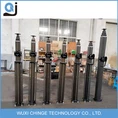
Once the site is ready, it's time to unload and assemble the equipment. A well - trained crew can usually unload the main components of the cell site on wheels, such as the tower, antennas, and communication equipment, in about an hour. The assembly of the Cell On Wheels Tower is a bit more time - consuming. Depending on the height and complexity of the tower, it can take anywhere from 1.5 to 3 hours. For a standard 30 - foot tower, it might take around 2 hours to assemble, connect all the cables, and make sure everything is secure.
Power and Connectivity Setup
After the physical assembly, we need to get the COW up and running in terms of power and connectivity. If there's a nearby power source, like a utility outlet, connecting the power can be done in 15 - 30 minutes. But if we have to rely on a generator, it takes a bit longer to set it up, test it, and connect it to the cell site equipment, which could take about an hour.
As for connectivity, establishing a backhaul connection to the core network is essential. If there's an existing fiber - optic line nearby, we can connect to it relatively quickly, perhaps within 30 minutes to an hour. However, if we need to use a wireless backhaul, such as a microwave link, it can take 1 - 2 hours to align the antennas correctly and configure the connection.
Testing and Optimization
Once the COW is physically set up and connected to power and the network, we need to test and optimize the system. This involves checking the signal strength, quality, and coverage area. We use specialized equipment to measure the signal and make adjustments to the antennas and other settings. Testing and optimization usually take about 1 - 2 hours, depending on how well the initial setup went.
Best - Case vs. Worst - Case Scenarios
In the best - case scenario, where the site is easily accessible, there's a nearby power source and fiber - optic connection, and the crew is highly experienced, a cell site on wheels can be set up in as little as 3 - 4 hours. This is ideal for small - scale events or quick - response situations where we need to get the communication up and running fast.
On the other hand, in a worst - case scenario, like a remote disaster - struck area with no power or existing infrastructure, it could take 8 - 12 hours or even longer. In such cases, we might have to deal with difficult terrain, limited resources, and challenging weather conditions, all of which can significantly slow down the setup process.
Our Experience and Expertise
As a supplier, we've had our fair share of both easy and challenging setups. We've set up COWs at large music festivals where we had to work around a tight schedule and a high - traffic area. In those cases, we managed to get the cell sites up and running within 4 - 5 hours, ensuring that thousands of festival - goers could stay connected.
We've also been involved in disaster - relief efforts, where the conditions were far from ideal. In one instance, after a major earthquake, it took us almost 10 hours to set up a cell site on wheels in a devastated area. But even in those tough situations, our team's expertise and the reliability of our Communication On Wheels equipment allowed us to provide much - needed communication support.


Why Our Cell Sites on Wheels are a Great Choice
One of the reasons our cell sites on wheels are so popular is their quick setup time. We've designed our equipment to be as modular and easy - to - assemble as possible. Our crew members are highly trained and experienced, which means they can work efficiently even under pressure.
Another advantage is that our COWs are equipped with the latest technology, which allows for faster signal processing and better connectivity. This means that once the site is set up, users can enjoy high - quality mobile services right away.
Get in Touch for Your Communication Needs
If you're in need of a cell site on wheels for an event, emergency situation, or any other reason, don't hesitate to reach out. We're here to provide you with the best - in - class communication solutions at a reasonable price. Our team can work with you to understand your specific requirements and ensure a smooth and timely setup. Whether you need a short - term deployment or a long - term solution, we've got you covered.
References
- Telecommunication Industry Association (TIA) standards for mobile cell site installation.
- Case studies from previous cell site on wheels deployments.