




Hey there! As a supplier of portable towers, I often get asked about how stable these things really are. It's a fair question, especially when you're considering investing in one. So, let's dive right into it and explore the stability of portable towers.
First off, what exactly is a portable tower? Well, it's a structure that can be easily moved from one place to another and is typically used for various purposes like providing communication signals, supporting cameras for surveillance, or even for lighting in outdoor events. There are different types of portable towers, such as the Portable Signal Tower, Telecommunication Tower Telescopic, and Telescopic Unguyed Tower. Each type has its own unique features and stability characteristics.
Factors Affecting Stability
Design and Construction
The design of a portable tower plays a huge role in its stability. A well - designed tower will have a proper base structure. Most portable towers have a wide and heavy base. This low - center - of - gravity design helps keep the tower upright, just like a不倒翁 (oops, I meant a toy that always stays upright). The materials used in construction also matter. High - quality steel or aluminum alloys are commonly used because they are strong and lightweight. Strong materials can withstand external forces like wind and vibrations without bending or breaking easily.
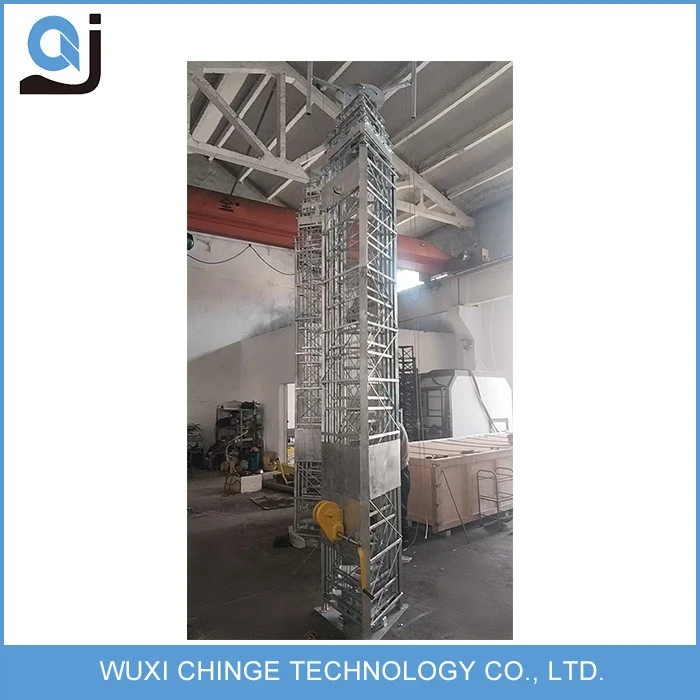
For example, our telescopic towers are designed with precision. The telescopic sections fit together snugly, which not only allows for easy height adjustment but also maintains the overall structural integrity. Each section is engineered to distribute the weight evenly, reducing the risk of the tower toppling over.
Ground Conditions
Where you set up the portable tower is crucial. If the ground is uneven, soft, or sloped, it can significantly affect the tower's stability. On soft ground, the tower's base may sink, causing the tower to lean. Uneven ground can put uneven stress on the tower's legs, leading to instability.
Before setting up a portable tower, it's important to prepare the ground properly. You might need to level the area, use ground mats or stabilizers to distribute the weight more evenly. For instance, if you're setting up a tower on a grassy field, you can place large, flat mats under the base to prevent it from sinking.
Wind and Weather
Wind is one of the biggest external factors that can challenge a portable tower's stability. Strong winds can exert a lot of force on the tower, especially if it has a large surface area. The shape of the tower also affects how it responds to wind. A streamlined design will experience less wind resistance compared to a tower with a bulky or irregular shape.
In windy conditions, it's important to take precautions. Some portable towers come with guy wires. These are cables that are attached to the tower at different heights and anchored to the ground. Guy wires help to counteract the wind force by providing additional support and keeping the tower in place. However, not all portable towers use guy wires. Our Telescopic Unguyed Tower is designed to be stable without the need for guy wires, which makes it more convenient to set up in some situations.
Testing and Certification
At our company, we take stability seriously. All our portable towers go through rigorous testing before they are released to the market. We test them under different conditions, including high - wind simulations and vibration tests. This ensures that the towers can meet or exceed industry standards.
We also have our products certified by relevant authorities. These certifications are a guarantee that our towers are safe and stable. When you buy a certified portable tower from us, you can have peace of mind knowing that it has been thoroughly inspected and approved.
Real - World Applications and Stability
Let's look at some real - world scenarios where the stability of a portable tower is crucial. In the telecommunications industry, portable towers are often used to provide temporary or emergency communication services. For example, during a natural disaster like an earthquake or a hurricane, traditional communication infrastructure may be damaged. Portable signal towers can be quickly deployed to restore communication. In these situations, the tower needs to be stable in unpredictable weather conditions and on various types of terrain.
In the event industry, portable towers are used for lighting and sound systems. A stable tower is essential to ensure the safety of the equipment and the people around it. Imagine if a tower with heavy lighting fixtures were to fall during a concert or a festival. It could cause serious injuries and damage.

Maintenance and Inspection
Regular maintenance and inspection are key to keeping a portable tower stable over time. You should check the tower for any signs of wear and tear, such as loose bolts, cracks in the structure, or corrosion. Loose bolts can weaken the connections between the tower's components, while corrosion can reduce the strength of the materials.
Inspecting the base and guy wires (if applicable) is also important. Make sure the base is clean and free from debris that could affect its contact with the ground. If you have guy wires, check their tension regularly. Over time, the tension may change due to weather conditions or normal use.
Comparing Different Types of Portable Towers
Let's compare some of the popular types of portable towers in terms of stability.
The Portable Signal Tower is usually designed for relatively short - term use and can be easily set up. It often has a simple yet effective base design that provides good stability for its intended purpose. These towers are commonly used for small - scale events or temporary communication needs.
The Telecommunication Tower Telescopic is more versatile in terms of height adjustment. The telescopic design allows it to reach different heights, but this also means that as it gets taller, the stability requirements become more critical. However, with proper design and construction, these towers can be very stable even at higher heights.
The Telescopic Unguyed Tower offers the advantage of easy setup without the need for guy wires. This makes it a great option for locations where guy wires are not practical, such as in urban areas or on small sites. Despite not having guy wires, it is engineered to be stable through its unique design and strong base.
Conclusion
So, how stable is a portable tower? Well, it depends on several factors, including design, ground conditions, and external forces. But with a well - designed, properly installed, and maintained portable tower, you can expect a high level of stability.
If you're in the market for a portable tower, whether it's for telecommunications, events, or other applications, we've got you covered. Our range of portable towers, including the Portable Signal Tower, Telecommunication Tower Telescopic, and Telescopic Unguyed Tower, are built with stability in mind.
If you're interested in learning more about our products or have any questions regarding the stability of our portable towers, feel free to reach out to us. We're here to help you make the right choice for your needs. Let's start a conversation about how our portable towers can meet your requirements and provide a stable solution for your projects.
References
- Engineering Handbook on Structural Stability
- Industry Standards for Portable Tower Design and Testing