




Hey there! I'm a supplier of Mobile Cell On Wheels, and I've been thinking a lot about what extra features we could add to these nifty devices. Mobile Cell On Wheels, as you might know, are super handy for providing temporary or emergency cellular coverage. They're like little mobile towers on wheels, and they've come a long way. But there's always room for improvement, right?
First off, let's talk about the basics. If you're not familiar with Mobile Cell On Wheels, they're essentially self - contained cellular base stations that can be easily transported to different locations. They're great for events, disaster - relief areas, or places where there's a sudden spike in demand for mobile connectivity.

One feature that could really take Mobile Cell On Wheels to the next level is enhanced power management. Most of the current models rely on diesel generators or batteries. While these work well, they have their limitations. Diesel generators are noisy and require regular refueling, and batteries need to be recharged. We could add a hybrid power system that combines solar panels with a small, more efficient generator. Solar power is clean and renewable, and it could significantly reduce the running costs and environmental impact. During the day, the solar panels could charge the batteries, and the generator could kick in during the night or in low - light conditions. This way, we'd have a more reliable and sustainable power source for the mobile cell.
Another cool addition would be a more advanced remote monitoring system. Right now, operators can check the basic status of the Mobile Cell On Wheels, like signal strength and battery level. But what if we could go deeper? We could add sensors that monitor the temperature, humidity, and vibration levels inside the unit. This data could be sent in real - time to a central control center, allowing operators to detect potential problems before they turn into major issues. For example, if the temperature inside the unit starts to rise abnormally, the control center could send an alert, and maintenance teams could be dispatched to check it out.
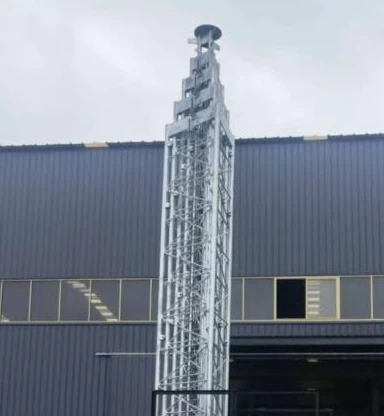
Let's also think about the antenna system. The Mobile Trailer Tower 30m is a great option for getting the antenna up high, but we could improve it further. We could add adaptive antenna technology. Adaptive antennas can adjust their radiation pattern based on the location and movement of the mobile devices in the area. This would improve the signal quality and coverage, especially in areas with a lot of interference or where the user density is high. Instead of sending the signal in all directions, the antenna could focus the signal towards the users, making the most of the available power.
Security is another area where we can make some improvements. Mobile Cell On Wheels are often deployed in remote or unsecured areas, which makes them vulnerable to theft and vandalism. We could add a multi - layer security system. This could include motion sensors, cameras, and an alarm system. The cameras could be connected to the remote monitoring system, so operators can see what's going on around the unit at any time. If the motion sensors detect any unauthorized movement, the alarm could go off, and the control center could be notified immediately.
Now, let's talk about the user experience. For the end - users, it would be great if we could add a feature that allows them to easily connect to the Mobile Cell On Wheels. We could develop a dedicated mobile app. The app could show the signal strength in different areas, the available network services, and even provide some basic troubleshooting tips. Users could also use the app to report any connectivity issues, which would help us improve the service.
In terms of capacity, we could add support for the latest 5G technologies. The demand for high - speed data is only going to increase, and 5G offers much faster speeds and lower latency compared to previous generations. By adding 5G support to our COW Cell On Wheels, we'd be able to meet the needs of more users and provide a better experience. We could also add additional network interfaces, like Wi - Fi 6, to allow for even more connectivity options.
We could also make the Mobile Cell On Wheels more modular. This means that different components, like the power system, antenna, and base station, could be easily swapped out or upgraded. If a new technology comes along, operators could simply replace the relevant component instead of having to buy a whole new unit. This would save money in the long run and keep the mobile cell up - to - date with the latest advancements.
Finally, we could add a feature that allows for easy integration with other emergency response systems. In a disaster - relief situation, the Mobile Cell On Wheels could be integrated with emergency communication networks, like those used by the police, fire department, and medical services. This would ensure seamless communication between different agencies and improve the overall response time.
If you're interested in these additional features or have your own ideas, I'd love to hear from you. Whether you're an event organizer, a disaster - relief coordinator, or just someone looking for a reliable mobile connectivity solution, we can work together to customize the Mobile Cell On Wheels to meet your specific needs. Contact us to start the procurement and洽谈 process (Oops, I meant the procurement and negotiation process, but you get the idea). Let's make the Mobile Cell On Wheels even better!
References
- Industry reports on mobile communication technologies
- Research papers on power management in mobile base stations
- Case studies of mobile cell deployments in various scenarios