




Hey there! I'm a supplier of portable cell towers, and I often get asked about the power consumption of these nifty devices. Today, I'm gonna dive deep into what that power consumption is all about, how it affects things, and why it matters to you.
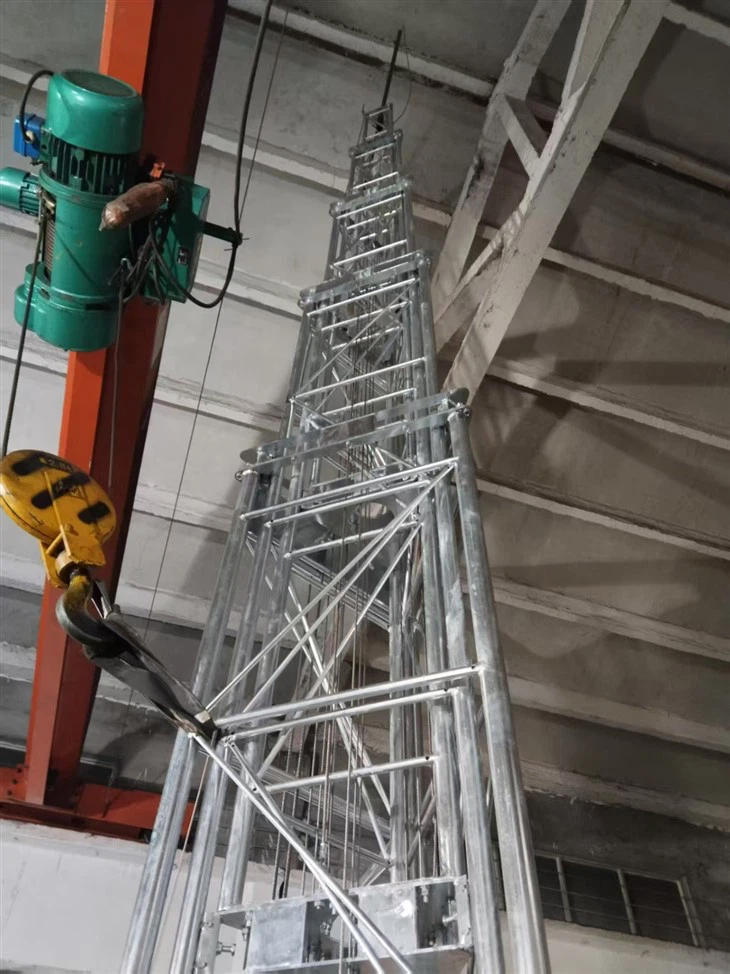
First off, let's understand what a portable cell tower is. It's a compact, mobile version of the big, fixed cell towers you see out in the wild. You can move it around easily, and it's super handy in places where there's no permanent cell coverage, like at outdoor events, during natural disasters, or in remote areas. We've got different types, like the Light Weight Harm Radio Tower, Portable Cell Tower, and Self - Supporting Antenna Tower.
So, what impacts the power consumption of a portable cell tower? Well, several factors come into play.
The Number of Users
If there are a whole bunch of people using the tower at once, it has to work harder. Think of it like a traffic cop at a busy intersection. When there's a lot of traffic (users), the cop has to be more active to keep things flowing. A portable cell tower with a high number of connected devices will need more power to handle all the data transfer, calls, and texts.

Bandwidth Requirements
The amount of data being transferred also matters big time. High - definition video streaming, online gaming, and large file downloads eat up a ton of bandwidth. When users are doing these bandwidth - hungry activities, the tower has to push out more data, which requires additional power. For instance, if you're at a music festival, and thousands of people are trying to stream the live concert on their phones, the tower will be under a lot of stress and need more juice.
Tower Configuration
The equipment inside the tower makes a difference too. Different types of radios, amplifiers, and baseband units have various power ratings. Some advanced models are designed to be more energy - efficient, while others might guzzle power to provide top - notch performance. If a tower is configured with high - end, feature - rich equipment, chances are it'll consume more power.
Environmental Conditions
Believe it or not, the weather and the environment can affect power consumption. In extremely hot or cold temperatures, the tower's cooling or heating systems need to work harder to keep the internal components at the right operating temperature. In a scorching desert, for example, the air - conditioning in the tower housing will need a lot of power to prevent the equipment from overheating.
Now, let's talk about how much power these towers actually use. Power consumption is usually measured in watts. On average, a small - to - medium - sized portable cell tower can consume anywhere from 500 to 3000 watts. A smaller tower used for a local event with a few hundred users might sit at the lower end of that range, around 500 - 1000 watts. Meanwhile, a larger tower set up in a disaster - relief area with thousands of users could burn through 2000 - 3000 watts or even more.
Why is understanding power consumption so important?
Cost
Power is money. The more power a tower uses, the higher the electricity bill. For an event organizer or a company that rents a portable cell tower, keeping power consumption in check means saving on operational costs. A high - power - consuming tower could end up being a budget buster, especially if it's in use for an extended period.
Sustainability
In today's world, we're all about being green. Lower power consumption means a smaller carbon footprint. By choosing a tower with efficient power usage, you're doing your part for the environment. Many of our Portable Cell Tower models are designed with energy - saving features to help reduce the impact on the planet.
Mobility
If you're using a portable cell tower in a remote area where there's no access to the electrical grid, power consumption becomes crucial. You might be relying on generators or battery packs to power the tower. A tower that uses less power will run longer on a single tank of fuel or battery charge, giving you more flexibility and less hassle with refueling or recharging.
Here are some tips to manage the power consumption of a portable cell tower:
Optimize Tower Settings
Work with your tower provider to configure the settings for your specific needs. Adjust the transmit power, for example. Sometimes, you don't need the full - blast power all the time. By fine - tuning the settings, you can reduce power consumption without sacrificing too much on performance.
Use Energy - Efficient Equipment
When choosing a portable cell tower, look for models with energy - saving technology. Our company offers a range of towers, like the Light Weight Harm Radio Tower, that are built with energy - efficiency in mind. These towers use advanced components that consume less power while still delivering great coverage.
Schedule Usage
If possible, plan when the tower will be in use. For a temporary event, you can turn off the tower during off - peak hours. This not only cuts down on power use but also extends the lifespan of the equipment.
In conclusion, the power consumption of a portable cell tower depends on multiple factors, including the number of users, bandwidth requirements, tower configuration, and environmental conditions. Understanding these factors and taking steps to manage power consumption can save you money, be kind to the environment, and make your portable cell tower experience more efficient.
If you're in the market for a portable cell tower and want to learn more about our products, their power consumption, or how they can benefit your specific situation, don't hesitate to reach out. We're here to provide you with all the information you need and help you make the best choice.
References
- "Cellular Network Engineering for Dummies" by Joe Angell
- Research papers on energy - efficient mobile communication systems published in IEEE Transactions on Wireless Communications