


As a supplier of cell on wheels trailers, I often get asked about the range of these remarkable mobile communication solutions. In this blog post, I'll delve into the various factors that determine the range of a cell on wheels trailer and how it can meet different communication needs.
Understanding Cell on Wheels Trailers
Cell on wheels trailers, also known as mobile cell sites, are self - contained units that can be quickly deployed to areas where temporary or emergency communication is required. They are essentially mobile base stations mounted on trailers, which can be easily transported to different locations. These trailers are equipped with antennas, transmitters, receivers, and other necessary communication equipment to establish a wireless network.
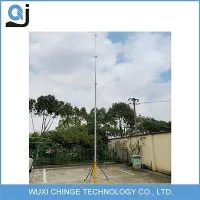
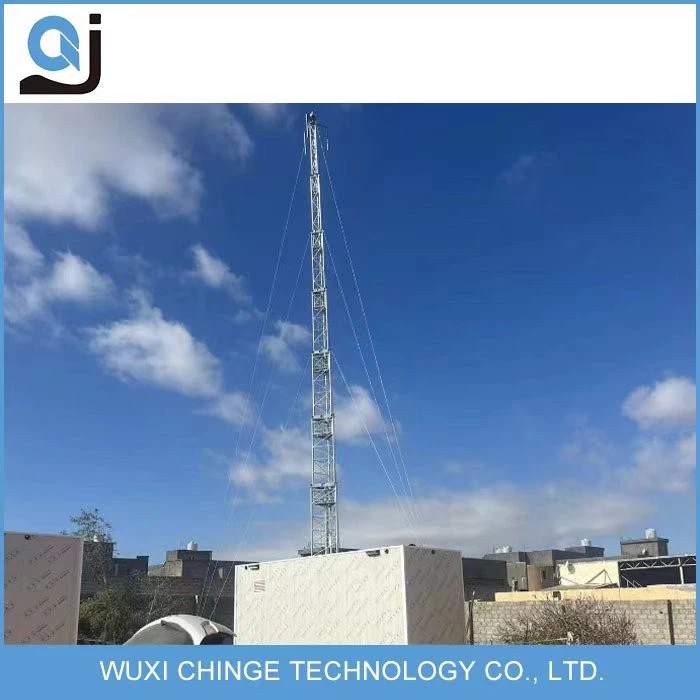
There are different types of cell on wheels trailers available in the market, each with its own features and capabilities. For instance, the Mobile Cell On Wheels is a highly versatile option that can be used in a wide range of scenarios. It offers flexibility in terms of deployment and can be customized to meet specific requirements. The Mobile Trailer Tower 30m is another popular choice, especially when a higher elevation for the antennas is needed to increase the range. And the Cell On Wheels With Shelter provides additional protection for the equipment, making it suitable for harsh environmental conditions.
Factors Affecting the Range of a Cell on Wheels Trailer
Antenna Height and Type
One of the most critical factors influencing the range of a cell on wheels trailer is the height and type of the antenna. Generally, the higher the antenna is placed, the greater the range it can cover. This is because a higher antenna can transmit and receive signals over a larger area, reducing the likelihood of obstacles blocking the signal. For example, the 30 - meter tower on the Mobile Trailer Tower 30m significantly increases the line - of - sight distance, allowing for a wider coverage area.
The type of antenna also plays a crucial role. Different antennas have different radiation patterns, which determine how the signal is distributed in space. Omnidirectional antennas radiate the signal in all directions horizontally, providing a 360 - degree coverage. This is useful in areas where users are located around the trailer in all directions. On the other hand, directional antennas focus the signal in a specific direction, which can be beneficial when trying to cover a long - distance area in a particular direction, such as along a highway or in a narrow valley.
Transmitter Power
The power of the transmitter on the cell on wheels trailer is another important factor. A higher - powered transmitter can send signals over a longer distance. However, there are regulatory limits on the maximum power that can be used to avoid interference with other communication systems. When designing a cell on wheels trailer, a balance must be struck between achieving a sufficient range and complying with these regulations.
Environmental Conditions
The environment in which the cell on wheels trailer is deployed has a significant impact on its range. In open, flat areas with few obstacles, the signal can travel much farther compared to urban or mountainous regions. In urban areas, buildings, trees, and other structures can block or reflect the signal, reducing its strength and range. Similarly, in mountainous areas, the terrain can cause the signal to be absorbed or scattered, limiting the coverage.
Weather conditions can also affect the range. Rain, fog, and heavy snow can attenuate the signal, especially at higher frequencies. For example, millimeter - wave frequencies are more susceptible to weather - related signal loss compared to lower frequencies.
Frequency Band
The frequency band used by the cell on wheels trailer is also a determining factor for its range. Lower frequency bands, such as those in the 700 MHz - 900 MHz range, generally have a longer propagation range compared to higher frequency bands. This is because lower frequencies are less affected by obstacles and can diffract around them more easily. However, higher frequency bands, such as those in the 2.3 GHz - 2.6 GHz range or even higher in the 5G millimeter - wave bands, offer higher data transfer rates but at the cost of a shorter range.
Typical Range of Cell on Wheels Trailers
Based on the above factors, the range of a cell on wheels trailer can vary widely. In ideal conditions, with a high - powered transmitter, a tall antenna, and a lower frequency band, a cell on wheels trailer can cover a radius of up to 20 - 30 kilometers or more. For example, in a rural area with flat terrain and a 30 - meter tower, using a lower frequency band and an omnidirectional antenna, a trailer might be able to provide coverage over a large area.
In more challenging environments, such as urban centers or mountainous regions, the range can be significantly reduced. In an urban area with many high - rise buildings, the range might be limited to just a few hundred meters to a couple of kilometers. This is because the buildings block and scatter the signal, reducing its strength and reach.
Applications and Range Requirements
The range requirements of a cell on wheels trailer depend on its intended application.
Emergency Response
In emergency response situations, such as natural disasters or large - scale accidents, a wide - area coverage is often needed. For example, in the aftermath of an earthquake, a cell on wheels trailer might need to cover a large area to provide communication for rescue teams, affected residents, and emergency services. In such cases, a trailer with a high - powered transmitter and a tall antenna is preferred to achieve a range of several kilometers.

Temporary Events
For temporary events like concerts, sports games, or festivals, the range requirements are more focused on the event area. If the event is held in a large open field, a cell on wheels trailer might need to cover an area of a few square kilometers to ensure that all attendees have access to communication services. However, if the event is held in a more confined space, such as an indoor arena, the range can be adjusted accordingly.
Remote Area Connectivity
In remote areas where there is no existing communication infrastructure, a cell on wheels trailer can be used to provide connectivity. The range requirements in these areas can be quite large, as the goal is to cover a wide geographical area to serve a scattered population. For example, in a remote rural community or a mining area, the trailer might need to cover a radius of 10 - 20 kilometers or more.
Conclusion
The range of a cell on wheels trailer is determined by a combination of factors, including antenna height and type, transmitter power, environmental conditions, and frequency band. As a supplier, we understand the importance of these factors and can customize the trailers to meet the specific range requirements of different applications.
Whether you need a wide - area coverage for emergency response, a focused coverage for a temporary event, or connectivity in a remote area, our cell on wheels trailers can be tailored to your needs. If you are interested in learning more about our products or discussing your specific requirements, we invite you to contact us for a detailed consultation and procurement discussion.
References
- "Wireless Communication Principles and Practice" by Theodore S. Rappaport.
- "Antenna Theory: Analysis and Design" by Constantine A. Balanis.
- Industry reports on mobile communication technologies and cell on wheels trailers.