


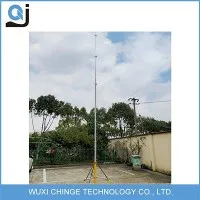
In the dynamic landscape of telecommunications, the Cell Site on Wheels (COW) has emerged as a crucial asset, offering flexible and rapid deployment solutions for enhancing network coverage. As a dedicated supplier of COWs, I've witnessed firsthand the transformative power of these mobile units in optimizing communication networks. However, one challenge that often comes to the forefront is signal interference. This blog post aims to delve into the signal interference situation of a Cell Site on Wheels, exploring its causes, effects, and mitigation strategies.
Understanding Cell Site on Wheels
Before we dive into the intricacies of signal interference, let's take a moment to understand what a Cell Site on Wheels is. A COW is a mobile telecommunications base station mounted on a trailer or a vehicle. It can be quickly dispatched to areas with temporary or unexpected network demands, such as large events, disaster - affected regions, or construction sites. COWs can be equipped with various types of antennas, transmitters, and receivers, allowing them to provide voice and data services to a specific area.
Our Cell On Wheels Trailer offers a range of features designed to meet diverse network requirements. It is built with high - quality materials to ensure durability and reliability in different environmental conditions. With its compact design, it can easily navigate through various terrains, ensuring that it reaches the location where it is most needed.
Causes of Signal Interference in a Cell Site on Wheels
The signal interference situation of a COW can be attributed to several factors, both external and internal.
External Factors
- Physical Obstructions: Buildings, mountains, and even dense foliage can block or reflect the radio signals emitted by the COW. These physical obstacles cause the signals to scatter, leading to a reduction in signal strength and quality. For example, in a densely populated urban area filled with high - rise buildings, the COW signals may bounce off these structures, creating multi - path interference.
- Other Radio Frequency Sources: In an era of increasing wireless communication, there are numerous radio frequency (RF) sources in the environment. Other cellular base stations, Wi - Fi routers, microwave ovens, and even some industrial equipment can emit RF signals in the same frequency bands as the COW. When these signals overlap, they can interfere with the COW's signals, causing disruptions in communication.
- Weather Conditions: Adverse weather conditions such as heavy rain, fog, and snow can also impact the signal performance of a COW. Raindrops can absorb and scatter the radio waves, reducing their intensity and range. High - altitude winds can also cause the antennas on the COW to sway, affecting their alignment and thus the signal direction.
Internal Factors
- Equipment Malfunction: Faulty components within the COW, such as antennas, transmitters, or receivers, can generate unwanted signals. These signals can interfere with the normal operation of the system and degrade the overall signal quality. For example, a damaged antenna may emit stray signals that overlap with the desired signals, leading to interference.
- Incorrect Configuration: Improper configuration of the COW's settings, such as frequency allocation, power output, and antenna gain, can also result in signal interference. If the frequency setting of the COW is too close to that of other nearby wireless devices, it can cause co - channel interference.
Effects of Signal Interference
The consequences of signal interference in a Cell Site on Wheels can be far - reaching and have a significant impact on both users and network operators.

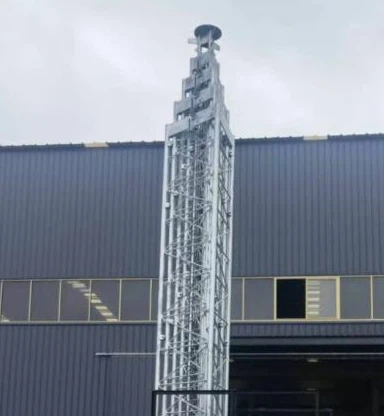
- Reduced Signal Strength: Interference can weaken the signal strength, making it difficult for mobile devices to connect to the COW. This results in dropped calls, slow data speeds, and poor call quality. Users may experience choppy audio, pixelated video, or long loading times when accessing online services.
- Limited Coverage Area: When signals are interfered with, the effective coverage area of the COW is reduced. This means that fewer users can benefit from the network services provided by the COW, and some areas may experience a complete loss of signal.
- Increased Error Rates: Interference can introduce errors in the data transmission process. Mobile devices may receive corrupted data packets, leading to data loss and re - transmission. This not only slows down the communication process but also increases the network traffic, putting additional strain on the system.
Mitigation Strategies
To address the signal interference situation of a Cell Site on Wheels, several mitigation strategies can be employed.
Technical Solutions
- Antenna Design and Placement: Using high - gain antennas with narrow beamwidth can help focus the signals in a specific direction, reducing the chances of interference from other sources. Additionally, proper antenna placement can minimize the impact of physical obstructions. For example, placing the antennas at a higher elevation can help overcome obstacles such as buildings and trees. Our Mobile Trailer Tower 30m provides an excellent platform for optimal antenna placement, ensuring better signal propagation.
- Frequency Management: Carefully selecting the operating frequencies of the COW can significantly reduce interference. By avoiding frequency bands that are heavily congested, the COW can operate more efficiently. Network operators can also use frequency coordination tools to ensure that the COW's frequencies do not conflict with those of other nearby wireless devices.
- Filtering and Shielding: Installing filters in the COW's equipment can help remove unwanted frequencies and reduce interference. Additionally, shielding the sensitive components of the COW can prevent external RF signals from penetrating the system and causing interference.
Operational Strategies
- Regular Maintenance and Inspection: Conducting regular maintenance and inspections of the COW can help identify and fix any equipment malfunctions or configuration issues that may be causing interference. This includes checking the antennas, cables, and other components for damage or loose connections.
- Real - time Monitoring: Implementing a real - time monitoring system can help detect and analyze interference patterns. By continuously monitoring the signal quality and strength, network operators can take proactive measures to mitigate interference, such as adjusting the power output or changing the frequency.
The Role of a Reliable Supplier
As a China Cell On Wheels Manufacturer, we understand the importance of providing high - quality COWs that are resilient to signal interference. Our products are designed with the latest technologies and undergo rigorous testing to ensure optimal performance in diverse environments. We also offer comprehensive technical support and after - sales services to help our customers address any signal interference issues that may arise.
Conclusion
Signal interference is an inevitable challenge in the operation of a Cell Site on Wheels. However, by understanding its causes, effects, and mitigation strategies, network operators can effectively manage this issue and ensure reliable communication services. As a trusted supplier of COWs, we are committed to providing innovative solutions that help overcome signal interference and enhance network performance.
If you are interested in our Cell Site on Wheels products or have any questions regarding signal interference and network optimization, we invite you to contact us for procurement and further discussion. Our team of experts is ready to work with you to meet your specific telecommunications needs.
References
- Smith, J. (2018). Wireless Communication Systems: Principles and Practice. McGraw - Hill.
- Thompson, R. (2020). RF Interference Handbook: Understanding and Resolving Interference Issues in Wireless Networks. Wiley.