




As a supplier of telescopic masts, I often get asked about the types of lights that can be attached to these versatile structures. Telescopic masts are used in a wide range of applications, from outdoor events and surveillance to emergency response and military operations. The ability to attach lights to a telescopic mast can significantly enhance its functionality, providing illumination in dark or low - light conditions. In this blog, I'll explore the different types of lights that can be attached to a telescopic mast and their suitability for various scenarios.
LED Lights
LED (Light - Emitting Diode) lights are one of the most popular choices for telescopic masts. They offer several advantages over traditional lighting sources. Firstly, LED lights are highly energy - efficient. They consume less power compared to incandescent or halogen lights, which is crucial when using a telescopic mast in remote locations where power supply may be limited. For example, in a large - scale outdoor event held in a field far from the main power grid, LED lights can be powered by a generator for a longer time without excessive fuel consumption.
Secondly, LED lights have a long lifespan. They can last for tens of thousands of hours, reducing the need for frequent bulb replacements. This is especially beneficial for applications where the mast is used regularly, such as in a surveillance system. A surveillance telescopic mast equipped with LED lights can operate continuously for months or even years without the hassle of changing bulbs.
LED lights also come in a variety of colors and beam patterns. White LED lights are commonly used for general illumination, while colored LEDs can be used for special effects or signaling purposes. For instance, in a concert or festival, colored LED lights attached to telescopic masts can create a vibrant and dynamic atmosphere.
Halogen Lights
Halogen lights are another option for telescopic masts. They produce a bright, white light that is similar to natural daylight. This makes them suitable for applications where high - quality illumination is required, such as in sports events or construction sites.
One of the advantages of halogen lights is their high luminous efficacy. They can produce a large amount of light per watt, providing intense illumination over a wide area. However, halogen lights also have some drawbacks. They are less energy - efficient than LED lights and generate a significant amount of heat. This heat can be a concern, especially in enclosed or sensitive environments.
In addition, halogen bulbs have a relatively short lifespan compared to LED lights. They need to be replaced more frequently, which can increase the maintenance cost. Despite these limitations, halogen lights are still a popular choice in some situations where the need for bright, immediate light outweighs the concerns about energy consumption and bulb lifespan.
Fluorescent Lights
Fluorescent lights are known for their energy efficiency and long lifespan. They work by passing an electric current through a gas - filled tube, which then emits ultraviolet light. The ultraviolet light is converted into visible light by a phosphor coating on the inside of the tube.
Fluorescent lights are a good option for applications where a large area needs to be illuminated evenly. They are often used in warehouses, factories, and large - scale outdoor areas. When attached to a telescopic mast, fluorescent lights can provide a soft, diffused light that reduces glare and shadows.
However, fluorescent lights have some limitations. They take a few seconds to reach full brightness, which may not be suitable for applications where immediate illumination is required. Also, fluorescent lights contain small amounts of mercury, which is a toxic substance. Proper disposal of fluorescent bulbs is necessary to prevent environmental pollution.
High - Intensity Discharge (HID) Lights
High - Intensity Discharge lights, such as metal halide and high - pressure sodium lights, are capable of producing extremely bright light. They are commonly used in large - scale outdoor lighting applications, such as stadiums, airports, and large construction sites.
Metal halide lights produce a white light with a high color rendering index (CRI), which means they can accurately reproduce colors. This makes them suitable for applications where color accuracy is important, such as in outdoor art exhibitions or sports events where the colors of the players' uniforms and the field need to be clearly visible.
High - pressure sodium lights, on the other hand, produce a yellow - orange light. They are more energy - efficient than metal halide lights and have a longer lifespan. High - pressure sodium lights are often used in street lighting and large - area outdoor illumination where color accuracy is not as critical.
When attaching HID lights to a telescopic mast, it's important to consider their power requirements and the need for a ballast. HID lights require a ballast to start and regulate the electrical current, which adds to the complexity and cost of the lighting system.
Choosing the Right Light for Your Telescopic Mast
When choosing the type of light to attach to your telescopic mast, several factors need to be considered.
Power Source: If your telescopic mast is used in a location with limited power supply, such as a remote outdoor area, energy - efficient LED lights may be the best choice. On the other hand, if you have access to a reliable power grid, you may have more options, including halogen, fluorescent, and HID lights.
Illumination Requirements: Consider the area that needs to be illuminated and the level of brightness required. For small - scale applications or areas where a soft, diffused light is sufficient, fluorescent lights or some types of LED lights may be suitable. For large - scale areas or applications that require intense illumination, such as stadiums or construction sites, HID lights or high - power halogen lights may be more appropriate.

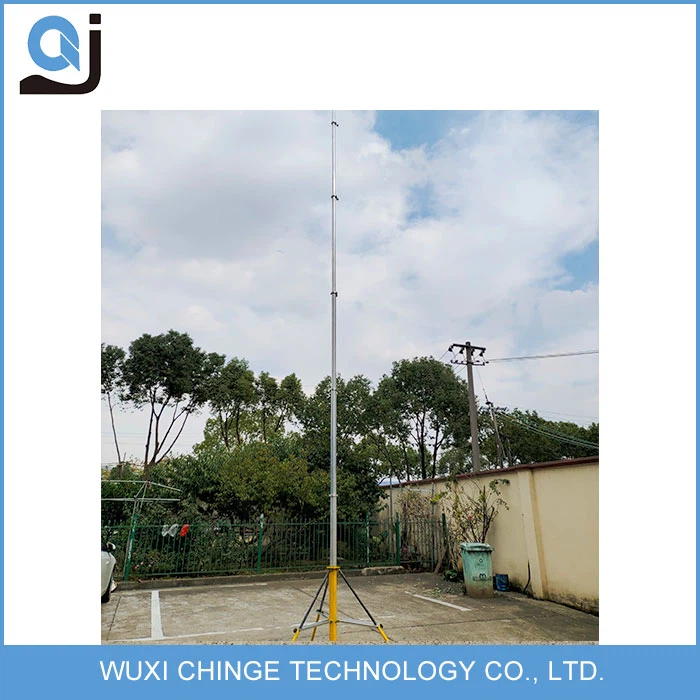
Application Environment: The environment in which the telescopic mast will be used also plays a role in the light selection. In a dusty or humid environment, lights that are well - sealed and resistant to moisture and dust are preferred. In a sensitive environment where heat generation is a concern, LED lights are a better option than halogen or HID lights.
Cost: The initial cost of the lights, as well as the long - term maintenance cost, should be taken into account. LED lights may have a higher upfront cost, but their low energy consumption and long lifespan can result in lower overall costs in the long run.
Our Telescopic Mast Products
At our company, we offer a variety of telescopic masts, including the Antenna Push Up Pole, Push Up Antenna Mast, and Tripod Telescoping Mast. These masts are designed to be sturdy, reliable, and easy to install. They can be customized to meet your specific requirements, including the attachment of different types of lights.
Whether you need a telescopic mast for a small - scale event or a large - scale industrial application, we can provide you with the right solution. Our team of experts can help you choose the most suitable type of light for your mast based on your specific needs and budget.
If you are interested in our telescopic masts or need more information about the types of lights that can be attached to them, please don't hesitate to contact us. We are always ready to assist you in making the best decision for your project. We look forward to the opportunity to discuss your requirements and work with you on your next telescopic mast project.
References
- Lighting Handbook: Reference and Application, Illuminating Engineering Society of North America.
- LED Lighting Basics, U.S. Department of Energy.
- High - Intensity Discharge Lighting Systems, National Electrical Manufacturers Association.