



We got a call last quarter from a regional emergency management team: "We need a 24-meter telescoping mast, wind-rated for coastal storms, with hybrid power and satellite backhaul. Budget: $50,000. Can you make it work?"
Short answer: not without compromising something that matters.
Long answer: let's talk about what actually drives cost-and where you can save without risking downtime.
At Wuxi Qinge Technology, we've quoted, built, and deployed telescoping antenna masts for emergency response, major events, and remote operations across Asia, Africa, and Europe. Pricing isn't a secret. But it's rarely as simple as "height × price per meter." This guide breaks down what you're actually paying for, where budgets get derailed, and how to plan for total cost-not just upfront price.
Why There's No Single "Price per Meter" Answer
If telescoping masts were like fence posts, pricing would be easy. They're not.
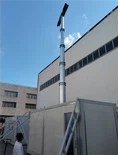
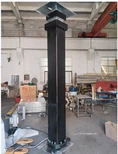
A telescoping antenna mast is a system: mast sections, locking mechanism, base stabilization, cable management, integration interfaces, and often power/backhaul coordination. Change one variable-wind rating, payload, deployment frequency-and the engineering (and cost) shifts.
Think of it like buying a vehicle: a sedan, an SUV, and a heavy-duty truck might all have four wheels. But you wouldn't expect them to cost the same-or perform the same in a storm.
The 7 Factors That Actually Drive Cost
1. Height: The Non-Linear Reality
| Height Range | Typical Base Price Range | Why the Jump? |
| 12–18m | $16,000 – $28,000 | Lower wind load, simpler transport, standard components |
| 19–24m | $32,000 – $52,000 | Reinforced guide rails, higher-capacity actuators, enhanced stabilization |
| 25–30m | $58,000 – $88,000 | Custom engineering, dynamic wind testing, premium locking systems |
| 30m+ (custom) | $95,000+ | Full structural analysis, specialized transport, often guy-wire integration |
2. Payload Capacity & Moment Rating
Payload isn't just "how many kg." It's:
- Static load: Weight of antennas, RRHs, dishes
- Dynamic load: Wind acting on those surfaces
- Moment arm: A 15kg load at 25m creates ~40% more torque than at 18m
✅ Standard payload: Included in base price
✅ High payload: +$7,000 – $19,000 (reinforced sections, custom brackets)
✅ Asymmetric/multi-point mounting: +$2,500 – $10,000 (custom top plates, balanced design)
Pro Tip: Share your antenna layout early. We'll validate moment load and bracket compatibility before quoting-avoiding costly redesigns later.
3. Wind Rating & Environmental Adaptation
| Rating | Typical Use Case | Cost Impact |
| 30 m/s | Inland, moderate climate | Base spec |
| 36 m/s | Coastal, exposed sites | +$3,500 – $8,000 |
| 45 m/s+ guy-wire kit | Extreme wind, typhoon zones | +$10,000 – $24,000 |
| Coastal package | Salt spray environments | +$2,000 – $5,000 |
Real Lesson: After a typhoon drill, we reviewed three masts rated for 36 m/s. The one with upgraded locking mechanisms and internal cable routing had zero issues. The other two needed post-event maintenance. The $6,500 upgrade saved ~$16,000 in downtime and repairs.
4. Power & Integration Options
| Configuration | Typical Add-On Cost | Best For |
| Basic trailer mount | $0 | Sites with existing grid/generator |
| Integrated diesel generator | +$5,000 – $12,000 | Remote deployments, emergency response |
| Hybrid system | +$16,000 – $32,000 | Long-term remote sites, fuel-constrained locations |
| Climate-controlled shelter | +$7,000 – $19,000 | All-weather operations, sensitive electronics |
Field Note: For a pipeline monitoring project in Northwest China, the hybrid power add-on increased upfront cost by ~35%. But it extended generator service intervals from 3 days to 6, cutting fuel logistics costs by ~55% over 14 months. The ROI was clear by month 7.
5. Backhaul Integration
| Option | Typical Cost | When It Makes Sense |
| Basic mounting brackets | +$600 – $2,000 | Existing fiber/microwave nearby |
| Integrated microwave dish mount + alignment tools | +$2,500 – $7,000 | Point-to-point backhaul in clear LOS |
| Satellite terminal integration | +$10,000 – $30,000 | No terrestrial backhaul available |
| Dual-mode | +$19,000 – $42,000 | Critical emergency response, zero-downtime requirements |
Pro Tip: Backhaul is often the hidden bottleneck. Budget for redundancy if uptime matters.
6. Deployment Frequency & Durability Specs
| Use Case | Recommended Spec Level | Cost Impact |
| Occasional use | Standard duty cycle | Base price |
| Frequent relocation | Heavy-duty guides, sealed bearings, quick-disconnect cables | +$4,000 – $13,000 |
| Daily/continuous operation | Industrial-grade components, predictive maintenance sensors, extended warranty | +$13,000 – $35,000 |
Real Lesson: An event production company initially chose standard-duty masts to save $10,000. After 16 months and 32 deployments, they spent ~$24,000 on unplanned maintenance. Their next order specified heavy-duty components. Total cost of ownership was 20% lower over 3 years.
7. Support, Training & Documentation
| Service | Typical Cost | Value |
| Basic deployment manual | Included | Good for experienced techs |
| On-site commissioning & training | +$1,200 – $3,500 + travel | Reduces early-life failures, accelerates team proficiency |
| Remote monitoring dashboard | +$1,800 – $7,000 | Proactive maintenance, reduced site visits |
| Extended warranty | +7–12% of hardware cost | Predictable OPEX, risk transfer |
Field Note: A government emergency team opted for on-site training. Their first independent deployment succeeded with zero RF issues. The $2,900 training investment prevented an estimated $13,000 in potential downtime during their first real incident.
Configuration Tiers: Real-World Examples
Tier 1: Essential Response
- Height: 15–18m telescoping mast
- Payload: 40kg standard
- Wind rating: 30 m/s
- Base: Trailer mount with outriggers
- Best for: Short-duration events, backup coverage, budget-constrained deployments
What's not included: Power system, backhaul, climate shelter, advanced telemetry
Tier 2: Professional Deployment
- Height: 20–24m with guy-wire option
- Payload: 60kg with custom bracket options
- Wind rating: 36 m/s + coastal package
- Base: Integrated 12 kW generator + battery buffer
- Add-ons: Climate shelter, remote monitoring, on-site training
Best for: Emergency response teams, multi-day events, remote industrial sites
Tier 3: Mission-Critical System
- Height: 25–30m
- Payload: 80–100kg with asymmetric mounting support
- Wind rating: 45 m/s with guy-wire kit + dynamic testing report
- Power: Hybrid system
- Backhaul: Dual-mode microwave/satellite with auto-failover
- Support: Predictive maintenance sensors, extended warranty, dedicated technical account manager
Best for: National emergency networks, major international events, long-term remote operations
The Hidden Costs Nobody Talks About
✅ Shipping & Logistics
- Domestic China: $600 – $3,000 depending on distance/access
- International sea freight: $2,000 – $10,000 (container share vs. full)
- Remote site delivery (off-road, crane assist): +$800 – $7,000
✅ Site Preparation
- Ground leveling, anchor installation, cable trenching: $400 – $4,000
- Permitting (urban areas): Varies widely; budget 2–6 weeks lead time
✅ Commissioning & Optimization
- RF alignment, backhaul testing, network registration: 4–8 hours of engineer time ($700 – $2,800)
- Post-deployment tuning (after crowd/weather data): Often overlooked but critical for performance
✅ Maintenance & Spares
- Annual service kit (filters, seals, lubricants): $250 – $1,000
- Critical spares inventory (lock pins, connectors, fuses): $400 – $2,000 upfront
- Unplanned repair downtime: Hard to quantify, but often 3–5× the part cost in lost connectivity
Pro Budgeting Tip: Add 15–25% contingency to your hardware quote for "soft costs." It's rarely wasted.
Total Cost of Ownership: Why Upfront Price Isn't the Whole Story
Let's compare two scenarios for a 22m mast in a coastal emergency response role:
| Factor | Option A | Option B |
| Hardware cost | $44,000 | $58,000 |
| Coastal upgrades | None | +$3,800 |
| Locking mechanism | Standard pins | +$3,200 |
| Cable management | External routing | +$1,300 |
| Training | PDF manual only | +$2,500 |
| 3-Year Estimated Costs | ||
| Unplanned maintenance | ~$12,500 | ~$2,900 |
| Downtime impact | ~$19,000 | ~$4,000 |
| Total 3-Year Cost | ~$81,300 | ~$71,700 |
Downtime valued at $500/hr for emergency comms-conservative estimate.
The "more expensive" option saved ~$9,600 over 3 years-and delivered higher reliability when it mattered most.
Quick Answers to the Questions Budget Planners Keep Asking
Q: Can I get a telescoping mast under $18,000?
A: Technically yes-for basic 12m models with minimal specs. But ask: will it meet your wind, payload, and reliability needs? We're happy to quote entry-level options, but we'll also flag where compromises may create downstream cost.
Q: What's the biggest budget surprise clients face?
A: Underestimating integration costs. The mast is 40–60% of total deployment cost. Power, backhaul, shelter, and commissioning often double the initial hardware quote. We provide full-scope budget templates upfront to avoid this.
Q: Do you offer rental or lease options?
A: Yes-for qualified projects. Rental rates typically run 7–11% of hardware value per month, with options to apply payments toward purchase. Ideal for short-term events or pilot deployments.
Q: How do I justify a higher-spec mast to finance?
A: Focus on risk mitigation and TCO. We provide:
- Wind test reports and failure-mode analysis
- Downtime cost modeling for your use case
- Maintenance cost comparisons
- Case studies
Q: What's included in your standard warranty?
A: 12 months on structural components, 6 months on actuators and electronics. Extended warranties (24–36 months) available. All warranties require proper deployment per our checklist-another reason we include commissioning support.
How We Approach Pricing at Wuxi Qinge
We don't start with "What's the lowest price?" We start with: "What needs to work, for how long, and under what conditions?"
That means:
- Sharing full cost breakdowns-not just a bottom-line number
- Flagging where spec changes impact reliability
- Offering phased options: "Here's what you need now; here's what to add later"
- Providing TCO modeling, not just hardware quotes
If you're budgeting for a telescoping mast deployment, we're happy to walk through your scenario. No pressure. No generic brochures. Just engineering notes, real cost data, and lessons from the field.