



Last year, one of our customers-a telecom contractor-called us just ten days before a large outdoor music festival.
The organizers expected more than 50,000 visitors, but the existing network had already struggled during previous events. As soon as thousands of people started uploading videos and making calls at the same time, network performance dropped sharply. The operator needed additional capacity, but building a permanent telecom tower wasn't even an option. By the time permits were approved and foundations were completed, the event would already be over.
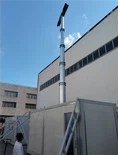
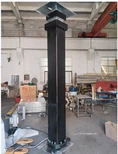
The solution wasn't another permanent tower. It was a Cell on Wheels Tower (COW Tower)-a mobile communication system that could be delivered by trailer, installed within a few hours, and removed once the event ended.
Projects like this are becoming increasingly common. Whether it's emergency response, temporary network expansion, remote construction sites or military communications, organizations are looking for faster and more flexible ways to deploy wireless coverage.
But here's something many first-time buyers don't realize: choosing the right Cell on Wheels Tower isn't about buying the tallest mast. It's about understanding the project.
Why Are More Projects Choosing Cell on Wheels Towers?
People often ask us the same question:
"Why not simply build a permanent telecom tower?"
Sometimes that's exactly the right solution. If a site will operate for ten or twenty years, investing in permanent infrastructure usually makes sense.
But many projects don't last that long.
We've supplied mobile cell towers for highway construction, mining operations, temporary command centers and public events. Some stayed in one location for six months. Others moved every few weeks.
For these projects, speed is often more valuable than permanence.
A portable telecom tower can be transported to the site, connected to power, equipped with antennas and commissioned within the same day. When the project finishes, it moves to the next location instead of becoming an unused asset.
That's why temporary cellular coverage has become an important part of modern telecom planning, especially as LTE and 5G networks continue expanding into remote or rapidly changing environments.
How Does a Cell on Wheels Tower Work in the Real World?
Brochures usually make deployment look easy: park the trailer, raise the mast and switch on the equipment.
Reality is a little different.
The first thing our engineers pay attention to isn't the mast-it's the ground.
If the trailer isn't level, the entire system will be affected once the telescopic mobile tower is fully extended. We've seen projects delayed because crews spent thirty minutes raising the mast but only five minutes checking the site.
On one project after several days of rain, the customer planned to deploy immediately after arrival. Before lifting the mast, one of our engineers noticed the stabilizers beginning to sink into the soft soil. We recommended placing steel support plates beneath each outrigger before continuing.
It wasn't a complicated solution, but it prevented the trailer from shifting after the antennas were installed.
That's the kind of detail you rarely find in product brochures, yet it's often what determines whether deployment goes smoothly.
Three Mistakes We See First-Time Buyers Make
After working on different mobile communication tower projects, we've noticed that the same mistakes appear again and again.
1. Choosing Tower Height Before Knowing the Equipment
Many buyers begin by asking for a 30-meter tower.
Our response is usually another question:
"What equipment are you planning to install?"
Height alone doesn't improve coverage. Antenna type, payload, surrounding buildings and terrain all influence network performance.
In several projects, a properly configured 20-meter tower actually provided better results than a taller mast carrying unsuitable equipment.
Always determine the communication equipment first. The tower should support the project-not the other way around.
2. Ignoring Wind Instead of Planning for It
Wind is probably the most underestimated factor in rapid deployment tower projects.
People often check the weather forecast and assume everything is safe because average wind speeds are low.
What really matters are sudden gusts.
Once sector antennas, microwave dishes or surveillance equipment are mounted, wind loads increase significantly. Choosing a trailer mounted tower with an appropriate wind rating-and following proper deployment procedures-is far more important than simply extending the mast to its maximum height.
3. Focusing Only on Purchase Price
Another common mistake is comparing quotations without considering the total cost of ownership.
A less expensive tower that requires longer installation, more personnel or frequent maintenance may ultimately cost more than a higher-quality system.
Experienced contractors usually evaluate deployment efficiency, transportation requirements, maintenance intervals and long-term reliability-not just the purchase price.
How Should You Choose the Right Cell on Wheels Tower?
If a customer asks us for advice, we rarely begin by discussing specifications.
Instead, we ask a few practical questions.
How long will the project remain at one location?
What communication equipment will be installed?
Is this for LTE, 5G or microwave transmission?
How many times will the tower be relocated each year?
Will deployment take place on paved roads, construction sites or uneven ground?
What are the local wind conditions?
The answers usually determine whether the customer needs a lightweight mobile telecom tower, a heavy-duty Cell on Wheels Tower, or a customized solution.
In our experience, understanding the application first almost always leads to a better investment than simply comparing technical data sheets.
The Right Tower Is the One That Fits the Project
There's no such thing as the perfect Cell on Wheels Tower.
There is only the tower that best fits the job.
Some projects demand maximum height to improve signal coverage. Others prioritize fast deployment because crews relocate every week. Emergency response teams care about reliability under difficult conditions, while event organizers often focus on quick installation and easy transportation.
After supporting customers across telecom, public safety, construction and infrastructure projects, we've found that successful deployments rarely depend on having the biggest tower. They depend on choosing equipment that matches real operating conditions.
At Wuxi Qinge Technology Co., Ltd., that's why our engineering team starts every conversation with the project itself. Once we understand the site, the communication equipment and the deployment environment, recommending the right Cell on Wheels Tower becomes much easier-and the project is far more likely to succeed.
Final Thoughts
A Cell on Wheels Tower is much more than a portable mast. It's a practical solution for delivering temporary cellular coverage wherever reliable communication is needed, whether for emergency response, infrastructure construction, public events or remote industrial operations.
If there's one lesson we've learned after years of supporting these projects, it's this: the success of a temporary communication system is determined long before the tower is raised. Careful planning, realistic site assessment and selecting equipment that matches the application will always have a greater impact than simply choosing the tallest or least expensive tower.