


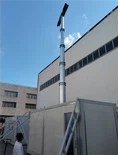

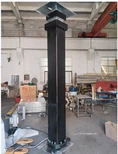
When customers approach us at Wuxi Qinge Technology Co., Ltd., the first thing they usually ask is for a specification sheet: height, load capacity, and price. But in practice, selecting the right telescoping mast for antenna is less about reading numbers and more about understanding how the system will behave in real operating conditions.
We've seen both successful and problematic deployments, and the difference usually comes down to whether the mast was selected based on the environment or just the catalog data.
A few years ago, a client preparing a temporary monitoring system for a remote industrial site chose a mast purely based on maximum height. It looked good on paper. But once installed, wind conditions and equipment load caused instability issues. The system technically "worked," but it required constant adjustment. Later, we helped them reconfigure the setup with a slightly shorter mast but higher wind stability rating-and the performance improved significantly. That experience is very common in this industry.
Below is how we typically guide clients through the decision process.
Height: more is not always better
Height is usually the first parameter people focus on, but it should always be tied to coverage requirements and terrain.
In flat, open environments, a moderate height mast can already achieve effective signal distribution. In contrast, areas with obstacles-buildings, trees, or uneven terrain-may require additional elevation to maintain line-of-sight.
However, increasing height also increases wind load and structural stress. We often remind clients that effective coverage height is more important than maximum extension height. Over-specifying height can increase cost and reduce stability without improving performance.
In one event deployment we supported, reducing mast height by a few meters actually improved overall signal consistency because it allowed a more stable antenna configuration.
Payload capacity: what will actually be mounted?
Payload is one of the most underestimated factors in selection.
A telescoping mast rarely supports just a single antenna. In real applications, you may need to mount multiple devices-sector antennas, microwave links, GPS modules, or even surveillance equipment depending on the use case.
We once worked with a remote site operator who initially calculated only antenna weight. Once cabling, brackets, and additional devices were added, the total load exceeded the original design margin. The mast had to be upgraded to ensure safe long-term operation.
A practical approach we recommend is to calculate:
Total equipment weight
Mounting hardware weight
Cable and accessory load
Then add a safety margin rather than designing at the limit.
This is especially important for long-duration deployments.
Wind resistance: the factor that decides stability in the field
If height determines coverage, wind resistance determines reliability.
Many issues in real deployments are not caused by equipment failure but by environmental stress. Wind creates both static and dynamic loads that can affect alignment, especially for directional antennas.
We've supported projects in coastal and open terrain areas where wind conditions changed the entire design approach. In one case, a client originally prioritized lightweight structure for easier transport. After experiencing repeated downtime due to mast movement, they shifted to a reinforced, wind-rated configuration with guying support. The difference in operational stability was significant.
Key considerations usually include:
Rated wind speed under operating conditions
Guy wire support requirements
Base anchoring method
Mast section rigidity under load
A stable mast doesn't just protect equipment-it ensures signal quality remains consistent.
Deployment environment: the context behind every specification
Even with the right height and load capacity, the environment can change everything.
For example:
Urban edges may require compact deployment due to space constraints
Remote industrial zones may prioritize ease of transport and setup speed
Emergency scenarios often prioritize rapid deployment over long-term optimization
We've seen projects where a technically "perfect" mast on paper was not practical on site simply because of access limitations or setup time constraints.
That's why we always ask clients about:
Terrain conditions
Deployment frequency
Transport method
Setup manpower availability
These details often matter more than the raw specifications.
Putting it together: balancing performance and practicality
Choosing the right telescoping mast is always a balance between three core factors:
Height for coverage
Payload for functionality
Wind resistance for stability
Optimizing one without considering the others usually leads to trade-offs in real-world performance.
At Wuxi Qinge Technology Co., Ltd., we've found that the most reliable systems are not necessarily the largest or most expensive, but the ones that are correctly matched to their actual operating conditions.
If you are evaluating a telescoping mast for antenna, the most useful starting point is not the specification sheet-it's your deployment scenario. Once that is clear, selecting the right configuration becomes much more predictable and much less risky.
If needed, we're always open to reviewing specific project conditions and sharing practical configuration suggestions based on real field experience.