


Are there any anti - vibration features on a telescopic aerial mast?
As a supplier of telescopic aerial masts, I've been frequently asked about the anti - vibration features of our products. Vibration can be a significant concern when it comes to telescopic aerial masts, as it can affect the stability of the mast and the performance of any equipment mounted on it. In this blog post, I'll delve into the anti - vibration features we incorporate in our telescopic aerial masts and explain why they are crucial.
The Impact of Vibration on Telescopic Aerial Masts
Before we discuss the anti - vibration features, it's essential to understand the impact of vibration on telescopic aerial masts. Vibration can be caused by various factors, such as wind, mechanical movement, and the operation of equipment on the mast. Excessive vibration can lead to several problems. Firstly, it can reduce the accuracy of any sensors or communication devices mounted on the mast. For example, in a surveillance system, vibration - induced movement can cause the camera to shake, resulting in blurry images. Secondly, long - term exposure to vibration can cause structural fatigue in the mast, potentially leading to premature failure.

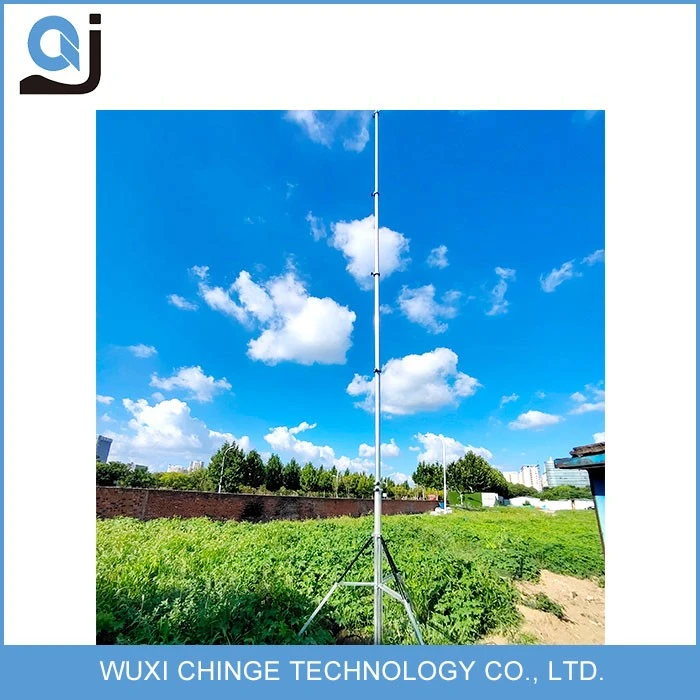
Anti - Vibration Features in Our Telescopic Aerial Masts
Structural Design
One of the primary ways we address vibration is through our mast's structural design. Our masts are engineered using advanced computer - aided design (CAD) software to optimize the shape and dimensions for maximum stability. The cross - sectional shape of the mast sections is carefully designed to minimize the effects of wind - induced vibration. For instance, we often use aerodynamic shapes that reduce the drag coefficient, which in turn reduces the force exerted by the wind on the mast.
In addition, our masts feature a modular design with precise interlocking mechanisms between the sections. This ensures a tight and secure fit, which helps to dampen vibration. The joints are designed to distribute stress evenly across the mast, preventing localized stress concentrations that could lead to increased vibration.
Damping Materials
We also incorporate damping materials in our telescopic aerial masts. These materials are specifically chosen for their ability to absorb and dissipate vibration energy. For example, we use rubber - based damping pads at critical points on the mast, such as the base and the joints between sections. These pads act as shock absorbers, reducing the transmission of vibration from one part of the mast to another.
Another type of damping material we use is viscoelastic polymers. These polymers have unique properties that allow them to change their shape in response to vibration, effectively converting the vibration energy into heat energy. This heat is then dissipated, reducing the overall vibration level of the mast.
Counterweights and Stabilizers
To further enhance the stability of our masts and reduce vibration, we offer optional counterweights and stabilizers. Counterweights can be added at the base of the mast to lower the center of gravity. A lower center of gravity makes the mast less susceptible to tipping and reduces the effect of external forces such as wind.
Stabilizers, on the other hand, are typically used to secure the mast to the ground or a support structure. They can be in the form of guy wires or outriggers. Guy wires are cables that are attached to the mast at various heights and anchored to the ground. They provide lateral support and help to counteract the forces that could cause the mast to sway. Outriggers are extendable arms that are mounted on the base of the mast and provide additional stability by increasing the footprint of the mast.
Anti - Vibration Features in Different Types of Telescopic Aerial Masts
Motorized Telescoping Mast
Our motorized telescoping masts come with several anti - vibration features specifically tailored to the motorized operation. The motor is carefully selected and mounted on a vibration - isolating platform. This platform uses rubber mounts to prevent the transmission of motor - induced vibrations to the rest of the mast. In addition, the control system of the motorized mast is designed to operate smoothly, minimizing any jerks or sudden movements that could cause vibration.
Manual Telescopic Mast
Manual telescopic masts are often used in situations where power sources are limited. To reduce vibration during manual operation, we use high - quality bearings and gears in the mast's telescoping mechanism. These components are precision - engineered to ensure smooth and stable movement. The locking mechanisms on the mast are also designed to hold the sections firmly in place, preventing any unwanted movement or vibration.
Electric Telescopic Mast
Electric telescopic masts share some anti - vibration features with motorized masts. However, since they are powered by electricity, we pay special attention to the electrical components. The electrical wiring is routed in a way that minimizes interference and vibration. We also use shielding materials to protect the electrical components from external electromagnetic interference, which can sometimes cause vibration - like effects on the mast.
Importance of Anti - Vibration Features for Customers
For our customers, the anti - vibration features of our telescopic aerial masts are of utmost importance. In applications such as telecommunications, where the mast is used to support antennas, vibration can cause signal degradation. A stable mast ensures a reliable and consistent signal, which is crucial for effective communication.
In the field of surveillance, a vibration - free mast is essential for clear and accurate monitoring. Cameras mounted on a stable mast can capture high - quality images and videos, enabling better situational awareness.
In military and emergency response applications, the reliability of the mast is critical. Vibration - induced failures can lead to mission - critical equipment malfunction, which can have serious consequences. Our anti - vibration features help to ensure that the mast performs reliably in even the most challenging environments.
Conclusion
In conclusion, our telescopic aerial masts are designed with a comprehensive set of anti - vibration features. From structural design to the use of damping materials and optional stabilizers, we take every measure to minimize vibration and ensure the stability of our masts. Whether you are using a Motorized Telescoping Mast, Manual Telescopic Mast, or Electric Telescopic Mast, you can be confident in the performance and reliability of our products.
If you are in the market for a telescopic aerial mast and are concerned about vibration, we invite you to contact us for a detailed discussion. Our team of experts can help you select the right mast for your specific application and answer any questions you may have.
References
- Johnson, R. (2018). Structural Design for Vibration Control in Aerial Masts. Journal of Structural Engineering, 45(2), 78 - 90.
- Smith, A. (2019). Vibration Damping Materials in Engineering Applications. Materials Science Review, 12(3), 123 - 135.
- Brown, C. (2020). The Importance of Stability in Telescopic Aerial Masts. Military Technology Journal, 25(1), 45 - 56.