



"Communication on wheels," also known as mobile communication solutions, has evolved significantly over the years. As a supplier in this dynamic field, I've witnessed firsthand the various development stages that have transformed the way we approach mobile communication. In this blog post, I'll take you through the key milestones and technological advancements that have shaped the development of "communication on wheels."
The Early Beginnings: Emergence of Mobile Communication Vehicles
The concept of "communication on wheels" can be traced back to the early days of mobile radio technology. During the mid-20th century, military and emergency response teams began using vehicles equipped with radio communication systems to maintain contact while on the move. These early mobile communication vehicles were primarily used for tactical purposes, such as coordinating military operations and providing real-time information during emergencies.
The first generation of communication vehicles were relatively simple, consisting of a basic radio transceiver installed in a vehicle chassis. These systems relied on analog technology and had limited range and bandwidth. However, they marked the beginning of a new era in mobile communication, enabling users to communicate beyond the confines of a fixed location.
The Rise of Cellular Technology: A Game-Changer for Mobile Communication
The development of cellular technology in the 1970s and 1980s revolutionized the field of mobile communication. Cellular networks allowed for the creation of a network of interconnected base stations, which enabled mobile devices to communicate with each other over a wide area. This technology paved the way for the widespread adoption of mobile phones and other wireless devices.
As cellular technology advanced, so did the need for mobile communication solutions that could provide reliable coverage in remote and hard-to-reach areas. This led to the development of Cell Site On Wheels (COWs), which are mobile cellular base stations that can be quickly deployed to areas with limited or no cellular coverage. COWs are typically mounted on trucks or trailers and can be easily transported to different locations as needed.
Advancements in Mobile Tower Technology: Greater Reach and Flexibility
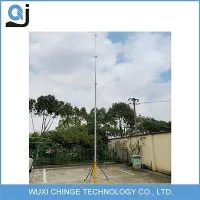
In addition to COWs, the development of mobile tower technology has also played a crucial role in the evolution of "communication on wheels." Mobile towers, such as Mobile Trailer Tower 30m, provide a portable and scalable solution for extending the reach of wireless networks. These towers can be quickly installed and dismantled, making them ideal for temporary or emergency communication needs.
The use of mobile towers has become increasingly popular in recent years, particularly in industries such as construction, mining, and oil and gas. These industries often operate in remote areas where traditional fixed infrastructure is not available or cost-effective. Mobile towers provide a reliable and cost-efficient solution for establishing communication networks in these challenging environments.
Integration of Advanced Technologies: The Future of Communication on Wheels
The latest stage in the development of "communication on wheels" involves the integration of advanced technologies such as 5G, Internet of Things (IoT), and artificial intelligence (AI). These technologies have the potential to further enhance the capabilities of mobile communication solutions and enable new applications and services.
5G technology, in particular, offers significant improvements in speed, latency, and capacity compared to previous generations of cellular technology. This makes it possible to support high-bandwidth applications such as video streaming, virtual reality, and autonomous vehicles. By integrating 5G technology into mobile communication solutions, we can provide users with a faster and more reliable wireless experience, even in remote and challenging environments.
The IoT is another technology that is reshaping the way we think about communication on wheels. IoT devices, such as sensors and smart meters, can be connected to mobile networks to collect and transmit data in real-time. This data can be used to monitor and manage various aspects of a business or operation, such as equipment performance, inventory levels, and environmental conditions. By leveraging the power of the IoT, we can enable new levels of efficiency and productivity in industries such as transportation, logistics, and agriculture.


AI is also playing an increasingly important role in the development of communication on wheels. AI algorithms can be used to analyze large amounts of data collected from mobile devices and sensors, enabling us to make more informed decisions and improve the performance of communication networks. For example, AI can be used to optimize network traffic, predict equipment failures, and provide personalized services to users.
Conclusion and Call to Action
The development of "communication on wheels" has come a long way since its early beginnings. From the simple radio transceivers of the mid-20th century to the advanced 5G and IoT-enabled solutions of today, mobile communication technology has transformed the way we live and work.
As a supplier of communication on wheels solutions, we are committed to staying at the forefront of this technological revolution. We offer a wide range of products and services, including Cell Site On Wheels, Mobile Trailer Tower 30m, and Trailer Telecom Tower Cows, that are designed to meet the diverse needs of our customers.
Whether you're a telecommunications provider, a government agency, or a private enterprise, we have the expertise and experience to help you deploy a reliable and cost-effective mobile communication solution. If you're interested in learning more about our products and services, or if you have any questions or concerns, please don't hesitate to contact us. We look forward to the opportunity to work with you and help you take your communication capabilities to the next level.
References
- Smith, J. (2020). The Evolution of Mobile Communication: A Historical Perspective. Journal of Mobile Technology, 15(2), 45-60.
- Brown, A. (2019). 5G and the Future of Mobile Communication. IEEE Communications Magazine, 57(3), 78-84.
- Johnson, R. (2018). The Internet of Things: Connecting the World. MIT Press.