



In the era of rapid technological advancement, 5G technology has emerged as a revolutionary force, promising ultra - fast speeds, low latency, and the ability to connect a vast number of devices simultaneously. As a supplier of cell on wheels towers, I am often asked whether our products support 5G technology. In this blog post, I will delve into this question, exploring the capabilities of cell on wheels towers in the context of 5G and how they can play a crucial role in the 5G ecosystem.
Understanding 5G Technology
Before we discuss whether cell on wheels towers support 5G, it is essential to understand the key characteristics of 5G technology. 5G operates on a wider range of frequencies compared to its predecessors, including low - band, mid - band, and high - band (mmWave) frequencies. Low - band frequencies offer wide coverage but relatively lower speeds, while high - band frequencies provide extremely high speeds but have limited coverage and are more susceptible to obstacles.
The deployment of 5G networks requires a dense network of small cells and macrocells to ensure seamless coverage. Small cells are particularly important in urban areas and high - traffic locations to boost capacity and speed. Macrocells, on the other hand, provide broader coverage over larger areas.
Cell on Wheels Towers: An Overview
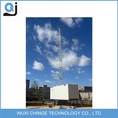
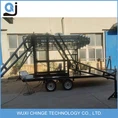
Cell on wheels towers, also known as mobile cell towers or COWs, are mobile communication units that can be quickly deployed to areas in need of temporary or emergency network coverage. They are mounted on trucks or trailers, allowing for easy transportation and setup. These towers can be equipped with various types of communication equipment, including antennas, base stations, and power systems.
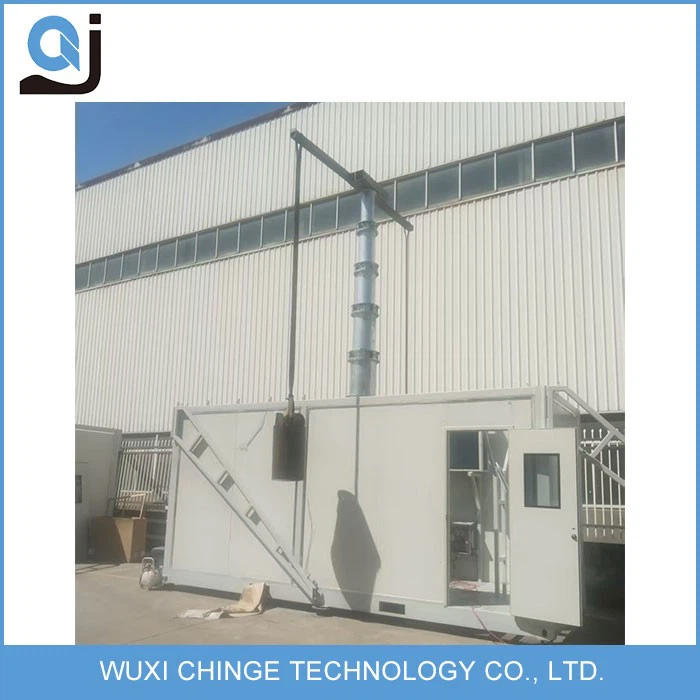
There are different types of cell on wheels towers available in the market. For instance, Cell On Wheels With Shelter provides a more protected environment for the communication equipment, shielding it from harsh weather conditions and potential vandalism. Small Cell On Wheels Portable Cell Station is designed for more targeted and localized coverage, which is especially useful in areas with high user density. And Cell Tower On Wheels offers a comprehensive solution that can be customized according to specific requirements.
Can Cell on Wheels Towers Support 5G?
The short answer is yes, cell on wheels towers can support 5G technology. Here are the reasons:
1. Flexible Frequency Bands
Modern cell on wheels towers can be equipped with antennas and base stations that support the frequency bands used in 5G networks. They can be configured to operate on low - band, mid - band, or high - band frequencies, depending on the specific needs of the deployment. For example, in rural areas where wide coverage is required, the tower can be set to operate on low - band frequencies. In urban areas with high data demand, it can be switched to mid - band or high - band frequencies to provide high - speed connectivity.
2. Quick Deployment for 5G Roll - out
One of the biggest challenges in 5G deployment is the need for a large number of small cells and macrocells to be installed quickly. Cell on wheels towers offer a solution to this problem. They can be rapidly deployed to areas where 5G coverage is lacking, such as during special events, natural disasters, or in the initial stages of a 5G network roll - out. This allows network operators to test and optimize the 5G network in a specific area before permanent infrastructure is installed.
3. Scalability
Cell on wheels towers are highly scalable. As the demand for 5G services grows, additional equipment can be easily added to the tower to increase capacity. This scalability is crucial in the 5G era, where the number of connected devices is expected to grow exponentially. For example, more antennas can be installed to support multiple input multiple output (MIMO) technology, which is a key feature of 5G networks for improving data throughput.
4. Compatibility with 5G Core Networks
Cell on wheels towers can be integrated with 5G core networks. They can communicate with the core network using standard interfaces, ensuring seamless connectivity and interoperability. This allows for the provision of end - to - end 5G services, including enhanced mobile broadband (eMBB), massive machine - type communications (mMTC), and ultra - reliable low - latency communications (URLLC).
Applications of 5G - Enabled Cell on Wheels Towers
The ability of cell on wheels towers to support 5G technology opens up a wide range of applications:
1. Special Events
Large - scale events such as concerts, sports games, and festivals often attract a large number of people in a concentrated area. Traditional network infrastructure may not be able to handle the sudden surge in data traffic. 5G - enabled cell on wheels towers can be deployed to these events to provide high - speed connectivity, allowing attendees to stream live videos, share photos, and use other data - intensive applications without experiencing network congestion.
2. Disaster Relief
In the aftermath of natural disasters such as earthquakes, floods, or hurricanes, communication infrastructure is often damaged. 5G - enabled cell on wheels towers can be quickly deployed to affected areas to restore communication services. They can support emergency responders in coordinating rescue efforts, providing real - time data transfer, and enabling remote monitoring of critical infrastructure.
3. Rural and Remote Areas
Rural and remote areas often face challenges in accessing high - speed internet due to the lack of fixed network infrastructure. 5G - enabled cell on wheels towers can be used to provide temporary or long - term 5G coverage in these areas. This can help bridge the digital divide, enabling rural communities to access online education, telemedicine, and other digital services.

4. Network Testing and Optimization
Network operators can use 5G - enabled cell on wheels towers to test and optimize their 5G networks. They can simulate different network conditions, such as high user density and interference, to identify and resolve issues before the permanent network is deployed. This helps ensure a high - quality 5G service for end - users.
Advantages of Choosing Our Cell on Wheels Towers for 5G
As a leading supplier of cell on wheels towers, we offer several advantages for customers looking to support 5G technology:
1. High - Quality Equipment
We use only the highest - quality antennas, base stations, and other components in our cell on wheels towers. Our equipment is designed to meet the strict requirements of 5G networks, ensuring reliable and high - performance connectivity.
2. Customization
We understand that every customer has unique requirements. That's why we offer customized solutions for our cell on wheels towers. Whether you need a tower for a specific frequency band, a particular application, or a specific geographical area, we can tailor our products to meet your needs.
3. Technical Support
Our team of experienced technicians provides comprehensive technical support. We can assist with installation, configuration, and maintenance of the cell on wheels towers. In case of any issues, our support team is available 24/7 to ensure minimal downtime.
4. Cost - Effectiveness
Compared to building permanent 5G infrastructure, using cell on wheels towers is a more cost - effective solution, especially for temporary or short - term deployments. Our competitive pricing and flexible rental options make it easier for customers to access 5G technology without breaking the bank.
Contact Us for 5G - Enabled Cell on Wheels Towers
If you are interested in deploying 5G - enabled cell on wheels towers for your business or organization, we would love to hear from you. Our team of experts can provide you with detailed information about our products, pricing, and technical specifications. We can also work with you to develop a customized solution that meets your specific needs. Contact us today to start the conversation about how our cell on wheels towers can support your 5G requirements.
References
- Andrews, J. G., Buzzi, S., Choi, W., Hanly, S. V., Lozano, A., Soong, A. C. K., & Zhang, J. C. (2014). What will 5G be? IEEE Journal on Selected Areas in Communications, 32(6), 1065 - 1082.
- Qualcomm. (2020). 5G and the New Global Economy. Qualcomm Incorporated.
- Ericsson. (2021). Ericsson Mobility Report. Ericsson AB.