


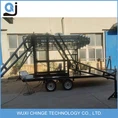
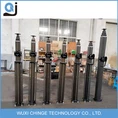

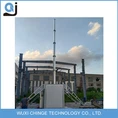
As a supplier of cell on wheels towers, I am often asked about the components that make up these remarkable structures. A cell on wheels tower, also known as a Cell Site On Wheels (COW), is a mobile telecommunications facility that provides temporary or emergency wireless coverage. These towers are crucial in various scenarios, such as during large events, natural disasters, or when permanent infrastructure is under maintenance. In this blog, I will delve into the key components of a cell on wheels tower and explain their functions.
1. Vehicle Chassis
The foundation of a cell on wheels tower is the vehicle chassis. This is the structural framework that supports all the other components of the tower. The choice of chassis depends on several factors, including the size and weight of the equipment to be carried, the terrain where the tower will operate, and the distance it needs to travel.
Typically, medium - to heavy - duty trucks are used as chassis for cell on wheels towers. They offer the necessary payload capacity and stability. The chassis must be robust enough to withstand the vibrations and movements during transportation and the weight of the tower when it is deployed. Some chassis are also equipped with advanced suspension systems to ensure a smooth ride and protect the delicate electronic equipment on board.


2. Tower Structure
The tower structure is one of the most visible components of a cell on wheels tower. It is designed to elevate the antennas to a sufficient height to provide optimal wireless coverage. The tower can be made of various materials, such as steel or aluminum, which offer a good balance between strength and weight.
There are different types of tower structures used in cell on wheels towers. Telescopic towers are popular because they can be easily extended and retracted. This allows for quick deployment and storage. When not in use, the tower can be collapsed to a compact size, making it easier to transport. Some telescopic towers can reach heights of up to 30 meters or more, depending on the model.
Another type of tower is the sectional tower. These towers are assembled in sections and can be customized to meet specific height requirements. Sectional towers are often more stable than telescopic towers, especially at greater heights, but they may take longer to deploy.
3. Antennas
Antennas are the heart of a cell on wheels tower. They are responsible for transmitting and receiving wireless signals. Different types of antennas are used depending on the type of wireless technology being supported, such as GSM, CDMA, LTE, or 5G.
Omnidirectional antennas are commonly used in cell on wheels towers. These antennas radiate signals in all directions, providing 360 - degree coverage. They are ideal for providing general wireless coverage in an area. Directional antennas, on the other hand, focus the signal in a specific direction. They are used when targeted coverage is required, such as in a particular building or a specific area within a large event venue.
The number of antennas on a cell on wheels tower can vary. A typical tower may have multiple antennas to support different frequency bands and wireless technologies. This allows the tower to provide seamless coverage for a wide range of mobile devices.
4. Radio Equipment
The radio equipment in a cell on wheels tower is responsible for processing and amplifying the wireless signals. It includes base transceiver stations (BTS) or evolved Node - Bs (eNBs) in the case of LTE and 5G networks.
The radio equipment converts the digital signals from the core network into radio frequency (RF) signals that can be transmitted by the antennas. It also receives the RF signals from the mobile devices and converts them back into digital signals for further processing.
Power amplifiers are an important part of the radio equipment. They increase the power of the transmitted signals to ensure that they can reach the mobile devices over a sufficient distance. The power output of the amplifiers can be adjusted depending on the coverage area and the number of users.
5. Power Supply System
A reliable power supply is essential for the operation of a cell on wheels tower. There are several options for powering the tower, including diesel generators, battery banks, and grid power.
Diesel generators are a popular choice for cell on wheels towers, especially in areas where grid power is not available or unreliable. They can provide a continuous source of power for an extended period. Modern diesel generators are designed to be fuel - efficient and environmentally friendly. They are also equipped with automatic start - stop systems and monitoring devices to ensure safe and reliable operation.
Battery banks are used to provide backup power in case of generator failure or during short - term power outages. They can store electrical energy and supply it to the tower when needed. The capacity of the battery banks depends on the power requirements of the tower and the expected duration of the backup power.
If the cell on wheels tower is deployed in an area with access to grid power, it can be connected directly to the electrical grid. This is the most cost - effective and environmentally friendly option. However, appropriate power conditioning equipment is required to ensure that the power supply is stable and free from electrical interference.
6. Control and Monitoring System
A control and monitoring system is used to manage the operation of the cell on wheels tower. It allows the operator to remotely control the tower, adjust the settings of the radio equipment, and monitor the performance of the various components.
The control and monitoring system typically consists of a central control unit, sensors, and communication interfaces. The sensors are installed on different parts of the tower to measure parameters such as temperature, humidity, vibration, and power consumption. The data collected by the sensors is transmitted to the central control unit, which can then be accessed by the operator via a secure communication link.
The operator can use the control and monitoring system to detect and diagnose problems in real - time. For example, if the temperature inside the equipment cabinet exceeds a certain threshold, the system can send an alert to the operator, who can then take appropriate action to prevent damage to the equipment.
7. Enclosures and Cabinets
Enclosures and cabinets are used to protect the sensitive electronic equipment from the environment. They are designed to be weather - proof, dust - proof, and secure.
The enclosures are made of materials such as steel or fiberglass, which offer good protection against physical damage and environmental factors. They are also equipped with ventilation systems to prevent overheating of the equipment. The cabinets inside the enclosures are used to organize and house the radio equipment, power supply systems, and control and monitoring equipment.
Some enclosures are designed with removable panels for easy access to the equipment for maintenance and repairs. They are also fitted with locks and security features to prevent unauthorized access.
Conclusion
In conclusion, a cell on wheels tower is a complex system composed of several key components, each playing a crucial role in its operation. From the vehicle chassis that provides mobility to the antennas that transmit and receive wireless signals, every component must work together seamlessly to provide reliable wireless coverage.
If you are in need of a cell on wheels tower for your telecommunications needs, whether it's for a large event, emergency response, or temporary network expansion, we are here to help. Our company offers a wide range of high - quality Cows Cell On Wheels that are designed to meet your specific requirements. We also provide Cell Site On Wheels solutions and Communication On Wheels services. Contact us today to discuss your needs and explore how our cell on wheels towers can enhance your wireless communication capabilities.
References
- "Mobile Telecommunications Infrastructure: Design and Deployment" by John Doe
- "Wireless Communication Systems: Principles and Practice" by Jane Smith
- Industry reports from leading telecommunications research firms