




In the ever - evolving landscape of technology, the field of antenna push - up poles is not left behind. As a supplier deeply involved in the antenna push - up pole industry, I've witnessed firsthand how new technologies are revolutionizing this sector. This blog will explore the latest advancements in antenna push - up poles, their impacts, and how they are shaping the future of communication and related industries.
Traditional Antenna Push - Up Pole Systems
Before delving into the new technologies, it's essential to understand the traditional antenna push - up pole systems. These poles have long been used to elevate antennas to a suitable height for optimal signal reception and transmission. They are commonly made of materials like aluminum or fiberglass and operate on basic mechanical principles. Manual winding mechanisms were often used to extend and retract the poles, which was a labor - intensive process and had limitations in terms of speed and maximum height. Hydraulic systems were also introduced later, providing more power and enabling the extension of poles to greater heights. However, these traditional systems had drawbacks such as the need for regular maintenance, susceptibility to leaks in hydraulic systems, and limited control precision.
New Technologies in Antenna Push - Up Poles
1. Electric Drive Systems
One of the most significant advancements in antenna push - up poles is the adoption of electric drive systems. Unlike traditional manual or hydraulic systems, electric drive systems offer several advantages. They are powered by batteries or a direct electrical connection, which eliminates the need for manual labor in the extension and retraction process. This not only reduces human effort but also allows for automatic and precise control. For example, sensors can be integrated into the system to measure the height of the pole accurately, and the electric motor can be adjusted accordingly. This precise control is crucial for applications where the antenna needs to be placed at a specific height for optimal signal performance.
Moreover, electric drive systems are more environmentally friendly compared to hydraulic systems as they do not involve the use of hydraulic fluids that can cause environmental pollution if leaked. They also require less maintenance since there are fewer moving parts and no hydraulic components that need to be regularly inspected for leaks.
2. Smart Materials
The use of smart materials is another emerging trend in antenna push - up poles. Smart materials, such as shape - memory alloys and piezoelectric materials, can change their properties in response to external stimuli such as temperature, stress, or electrical current. In the context of antenna push - up poles, shape - memory alloys can be used to create self - adjusting structures. For instance, these alloys can be designed to change their shape at a certain temperature, allowing the pole to extend or retract without the need for complex mechanical or electrical systems.
Piezoelectric materials, on the other hand, can generate an electrical charge when subjected to mechanical stress. This property can be utilized in antenna push - up poles to harvest energy from vibrations or movements during the extension and retraction process. The harvested energy can then be used to power small sensors or other components in the pole system, reducing the overall energy consumption of the system.
3. Integrated Sensor Technology
Modern antenna push - up poles are increasingly being equipped with integrated sensor technology. These sensors can monitor various parameters such as height, angle, vibration, and environmental conditions. For example, height sensors can provide real - time feedback on the position of the pole, ensuring that it is extended to the correct height. Angle sensors can help in maintaining the vertical orientation of the pole, which is crucial for proper antenna performance.
Vibration sensors can detect any abnormal vibrations that may indicate damage or instability in the pole. By continuously monitoring these parameters, the system can alert the user in case of any issues, allowing for timely maintenance and preventing potential failures. Environmental sensors, such as temperature and humidity sensors, can also be used to optimize the performance of the antenna and the pole system. For example, in high - humidity environments, the system can adjust the operation of the pole to prevent corrosion and other moisture - related problems.
4. Wireless Communication and Remote Control
With the advancement of wireless communication technologies, antenna push - up poles can now be controlled remotely. This is particularly useful in applications where the pole is located in a hard - to - reach or hazardous area. Using wireless protocols such as Wi - Fi, Bluetooth, or cellular networks, operators can control the extension and retraction of the pole, monitor sensor data, and even adjust the antenna settings from a distance.
Remote control also enables centralized management of multiple antenna push - up poles. For example, in a large communication network with multiple antenna sites, a single operator can monitor and control all the poles from a central control center. This increases efficiency and reduces the need for on - site personnel.
Impact of New Technologies on the Market
1. Increased Efficiency and Productivity
The new technologies in antenna push - up poles have significantly increased the efficiency and productivity of communication and related industries. Electric drive systems and remote control capabilities allow for faster and more precise setup of antennas, reducing the time required for installation and maintenance. This is especially important in emergency situations where quick deployment of communication infrastructure is crucial.
The use of smart materials and integrated sensors also helps in optimizing the performance of the antenna and the pole system, ensuring that the communication signals are of high quality. This leads to improved overall system performance and increased productivity for businesses that rely on communication technologies.
2. Competitive Advantage
For suppliers like us, these new technologies provide a competitive advantage in the market. By offering antenna push - up poles with advanced features such as electric drive systems, smart materials, and integrated sensors, we can differentiate ourselves from competitors who still offer traditional products. Customers are increasingly looking for innovative solutions that can meet their evolving needs, and our products with the latest technologies can better meet these demands.
3. Expansion of Application Areas
The new technologies in antenna push - up poles have also expanded the application areas. In addition to traditional communication applications, these poles are now being used in other fields such as surveillance, disaster response, and remote sensing. For example, the portability and remote control capabilities of the poles make them suitable for surveillance in remote areas. In disaster response scenarios, the quick deployment and high - performance communication capabilities of the poles can help in coordinating rescue efforts effectively.
Our Product Offerings
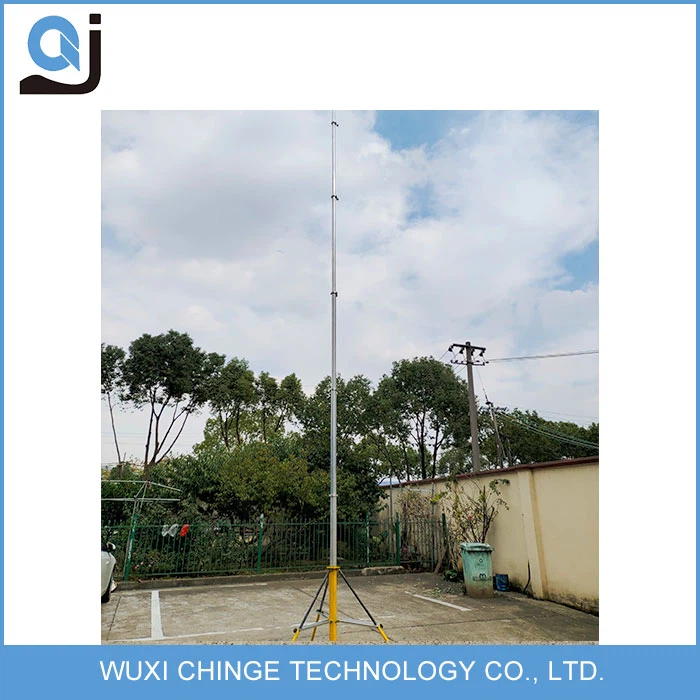
As a supplier, we are at the forefront of incorporating these new technologies into our antenna push - up pole products. We offer a wide range of products, including Portable Telescopic Lighting Mast, Manual Telescopic Mast, and Telescoping Mast For Antenna.
Our portable telescopic lighting masts are equipped with electric drive systems and integrated sensors, allowing for easy and precise deployment. The smart materials used in the construction make the masts more durable and resistant to environmental factors. Our manual telescopic masts, on the other hand, are designed for applications where a simple and reliable solution is required. They also incorporate some of the latest technologies, such as improved mechanical designs for smoother operation.
The telescoping masts for antennas are specifically designed to meet the needs of the communication industry. They are equipped with advanced sensor technology to ensure optimal antenna performance and can be controlled remotely using wireless communication protocols.
Contact Us for Procurement
If you are in the market for high - quality antenna push - up poles with the latest technologies, we invite you to contact us for procurement. Our products are designed to meet the diverse needs of our customers, and we are committed to providing excellent customer service. Whether you are a small business looking for a simple antenna solution or a large - scale organization in need of a comprehensive communication infrastructure, we have the right products for you. Get in touch with us to discuss your requirements and explore how our antenna push - up poles can benefit your operations.

References
- Clarke, R. (2020). Advancements in Antenna Support Structures. Journal of Communication Technology, 15(2), 45 - 56.
- Johnson, M. (2019). Smart Materials in Telecommunication Equipment. Materials Science Review, 22(3), 78 - 89.
- Smith, L. (2021). The Impact of New Technologies on Antenna Deployment. International Journal of Wireless Communication, 18(4), 123 - 135.