




Hey there! As a supplier of crank up masts, I've had my fair share of experiences with both single - mast and multi - mast setups. In this blog, I'm gonna break down the differences between these two types of setups to help you make an informed decision for your specific needs.
Let's start with the single - mast setup. A single - mast setup is exactly what it sounds like – you've got one mast doing all the work. It's a simple and straightforward solution. If you're on a tight budget or you just need to reach a moderate height, a single mast can be a great choice. For instance, if you're setting up a small - scale antenna for a home radio station, a single mast can get the job done.
One of the biggest advantages of a single - mast setup is its simplicity. There are fewer parts to worry about, which means less maintenance. You don't have to coordinate multiple masts, so the installation process is usually quicker and easier. You can often set up a single mast on your own without needing a large crew. It's also more compact when not in use, making it easier to store.
However, single - mast setups do have their limitations. They typically have a lower weight - bearing capacity compared to multi - mast setups. If you need to mount heavy equipment like large - scale antennas or cameras, a single mast might not be able to handle the load. Also, the height you can reach with a single mast is somewhat restricted. If you need to get your equipment really high up, you might find that a single mast just won't cut it.
Now, let's talk about multi - mast setups. A multi - mast setup consists of two or more masts working together. This setup is great for more complex and demanding applications. If you're running a commercial radio station or a surveillance system that requires multiple antennas at different heights, a multi - mast setup is the way to go.

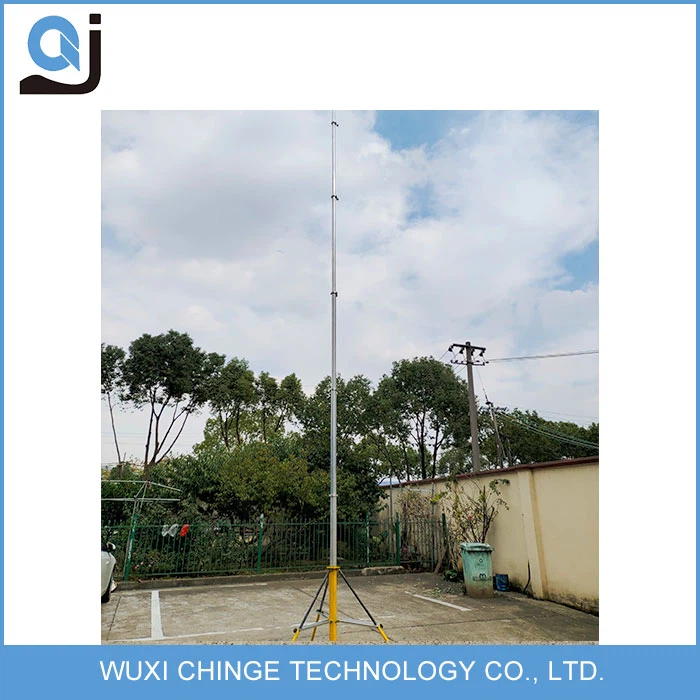
One of the main benefits of a multi - mast setup is its increased height and weight - bearing capacity. With multiple masts, you can reach much greater heights and support heavier loads. This makes it suitable for large - scale projects where you need to install heavy and bulky equipment high above the ground. Multi - mast setups also offer more flexibility in terms of equipment placement. You can position different antennas or sensors at different heights and angles, which can improve the performance of your system.
But multi - mast setups aren't without their drawbacks. They're more expensive than single - mast setups. You've got to buy multiple masts, along with all the additional hardware needed to connect and support them. The installation process is also more complex and time - consuming. You'll probably need a professional crew to set it up properly. Maintenance is another issue. With more parts and connections, there's a higher chance of something going wrong, and it can be more difficult to troubleshoot problems.
In terms of materials, both single - mast and multi - mast setups can be made from a variety of materials, such as aluminum. Aluminum is a popular choice because it's lightweight, corrosion - resistant, and relatively strong. If you're interested in an Aluminum Telescopic Pole, it can be a great option for either a single - mast or multi - mast setup.
When it comes to manual operation, Manual Telescopic Mast can be used in both single - mast and multi - mast configurations. Manual masts are a good choice if you want to have more control over the extension and retraction process. They're also often more affordable than motorized masts.
If you're specifically looking for a mast for an antenna, a Telescoping Mast For Antenna can be customized for either a single - mast or multi - mast setup. The right choice depends on the size and type of antenna you're using, as well as your height and weight requirements.
So, how do you decide between a single - mast and a multi - mast setup? Well, it all comes down to your specific needs. If you're on a budget, need a simple setup, and don't require extreme height or heavy - load capacity, a single - mast setup is probably the way to go. On the other hand, if you're working on a large - scale project, need to reach great heights, and support heavy equipment, a multi - mast setup is the better option.
As a crank up mast supplier, I'm here to help you make the right choice. Whether you're leaning towards a single - mast or multi - mast setup, I can provide you with high - quality masts and all the necessary accessories. If you have any questions or need more information, don't hesitate to reach out. We can have a chat about your project, and I'll do my best to offer a solution that fits your needs and budget.
In conclusion, both single - mast and multi - mast setups have their own unique features and advantages. By understanding the differences between them, you can make an informed decision that will ensure the success of your project. So, take some time to think about your requirements, and if you're ready to make a purchase or just want to learn more, feel free to contact me. I'm looking forward to helping you out!
References:
- Industry knowledge and experience as a crank up mast supplier.
- General information on mast technology and applications.